
Week 1: Hosea
Week 5:1: Nehemiah facing strugglesHosea
Week 4: Nehemiah 5-8
Objective:
-
NehemiahHosea’sDealsUnfaithfulwith OppressionWife -
TheHosea'sGenerosity of Nehemiahfamily -
ConspiracyGod’sAgainstContinuingNehemiahLove for Israel -
The Wall Completed The Captives Who Returned to JerusalemEzra Reads and Explains the LawThe FeastFruits ofTabernaclesrepentance
Resources:
- Fr Tadros Y Malaty Commentary
- Catena Bible Commentary
- Fr Dawoud Lamie Bible study (Arabic)
- Metropolitan Youssef - Hosea
Reading:
NehemiahHosea5: 1-19
1NehemiahHosea6: 1-1911NehemiahHosea7: 1-6Nehemiah 8: 1-1814
Key verse(s):
“WeWhen will restoreIsrael it,was a child, I loved him, And out of Egypt I called My son.” Hosea 11:1
NOTE TO SERVANT:
-
Please plan to ask and
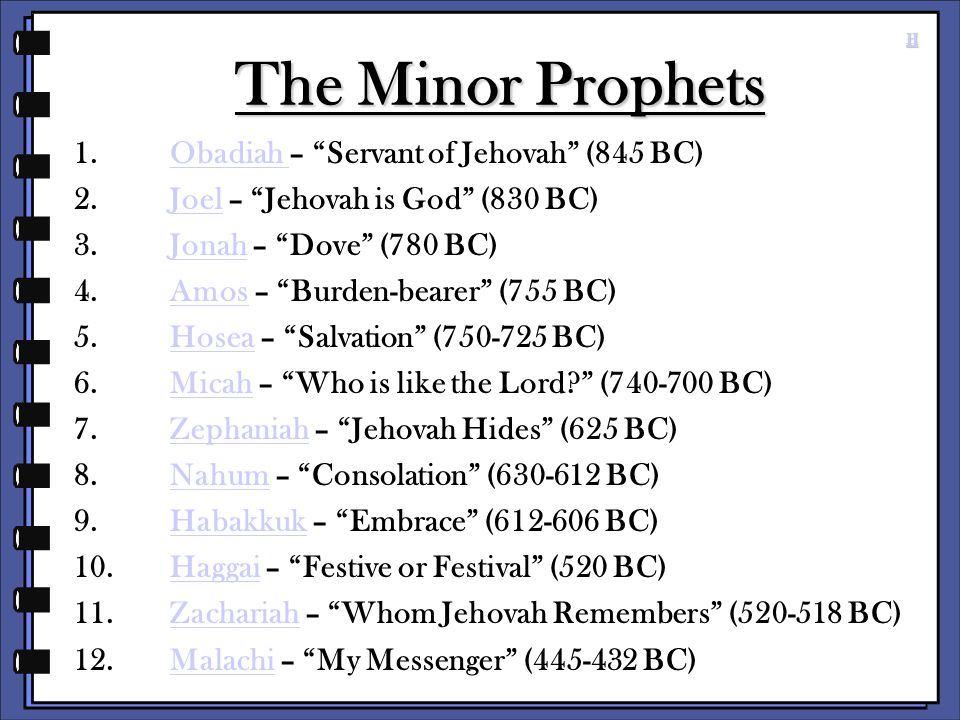
willreviewrequirethesenothingquestionsfromeverythem;week:- Who are the minor prophets? Can you recite them?
- The theme for last week's minor prophet
- Highlight Messianic prophecy
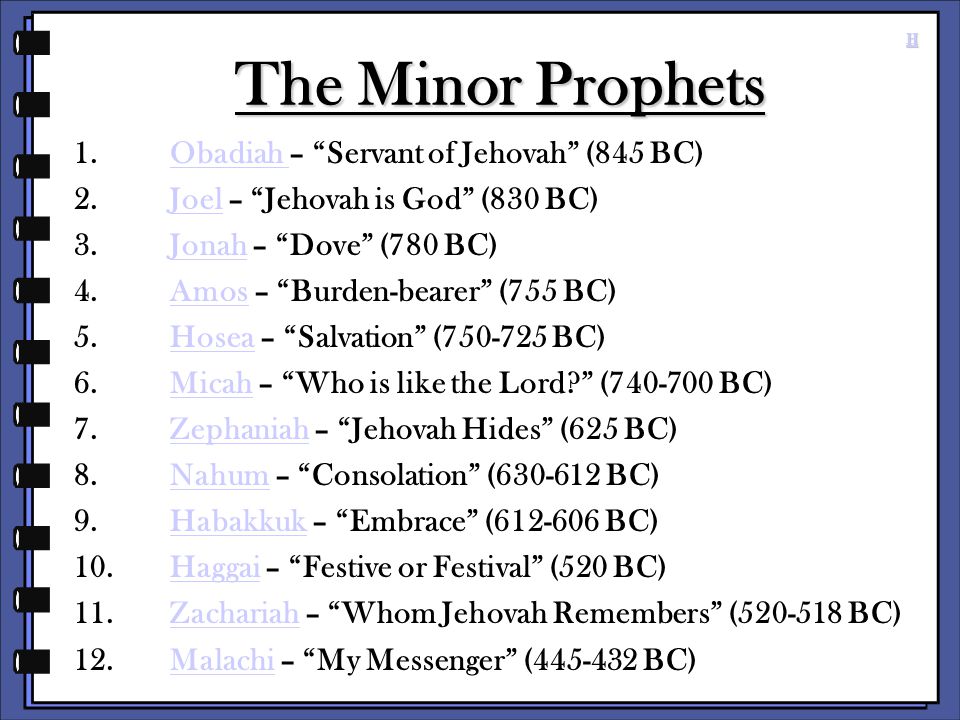
- Who are the minor prophets? Can you recite them?
Minor Prophets introduction:
-
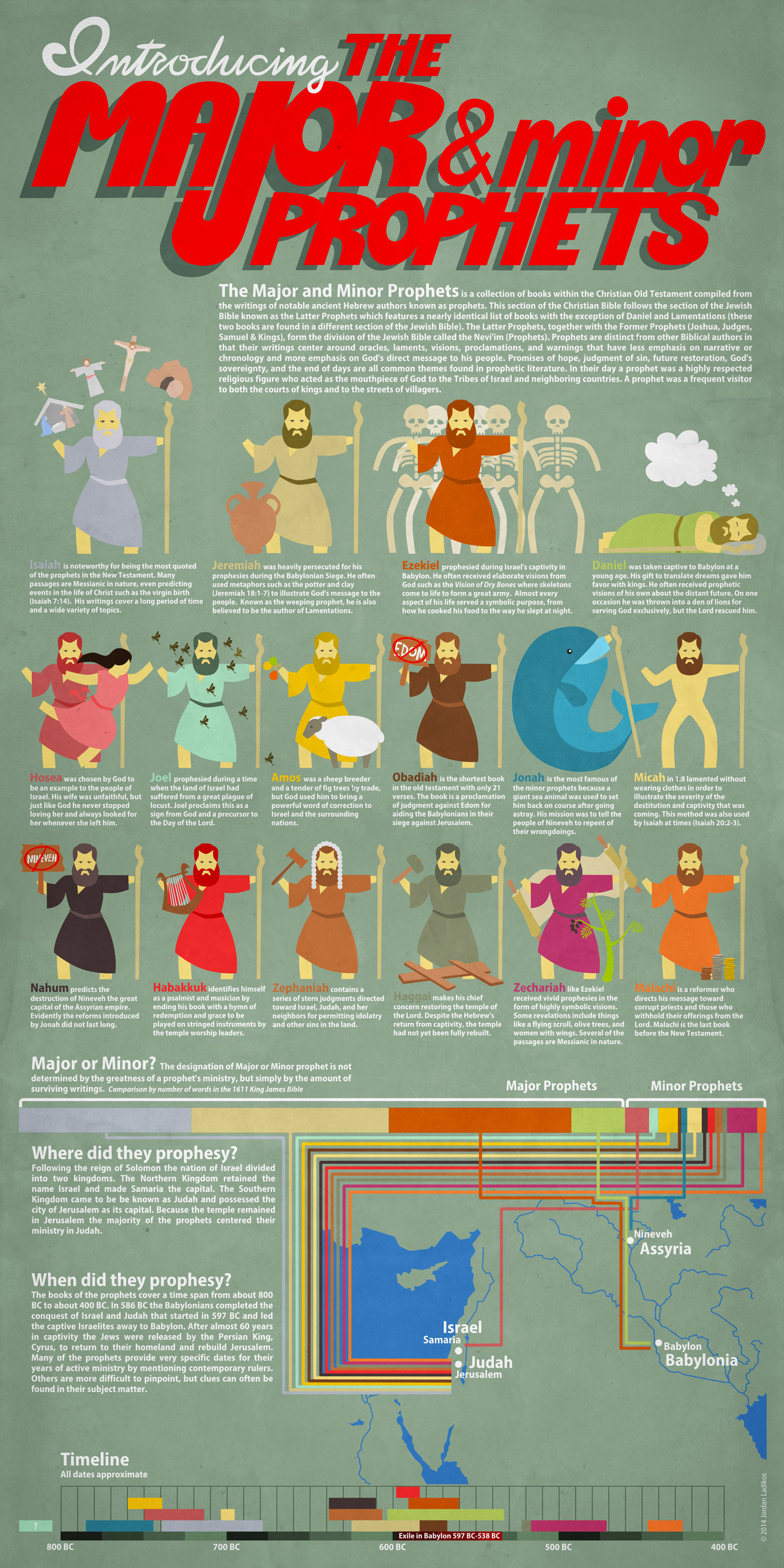
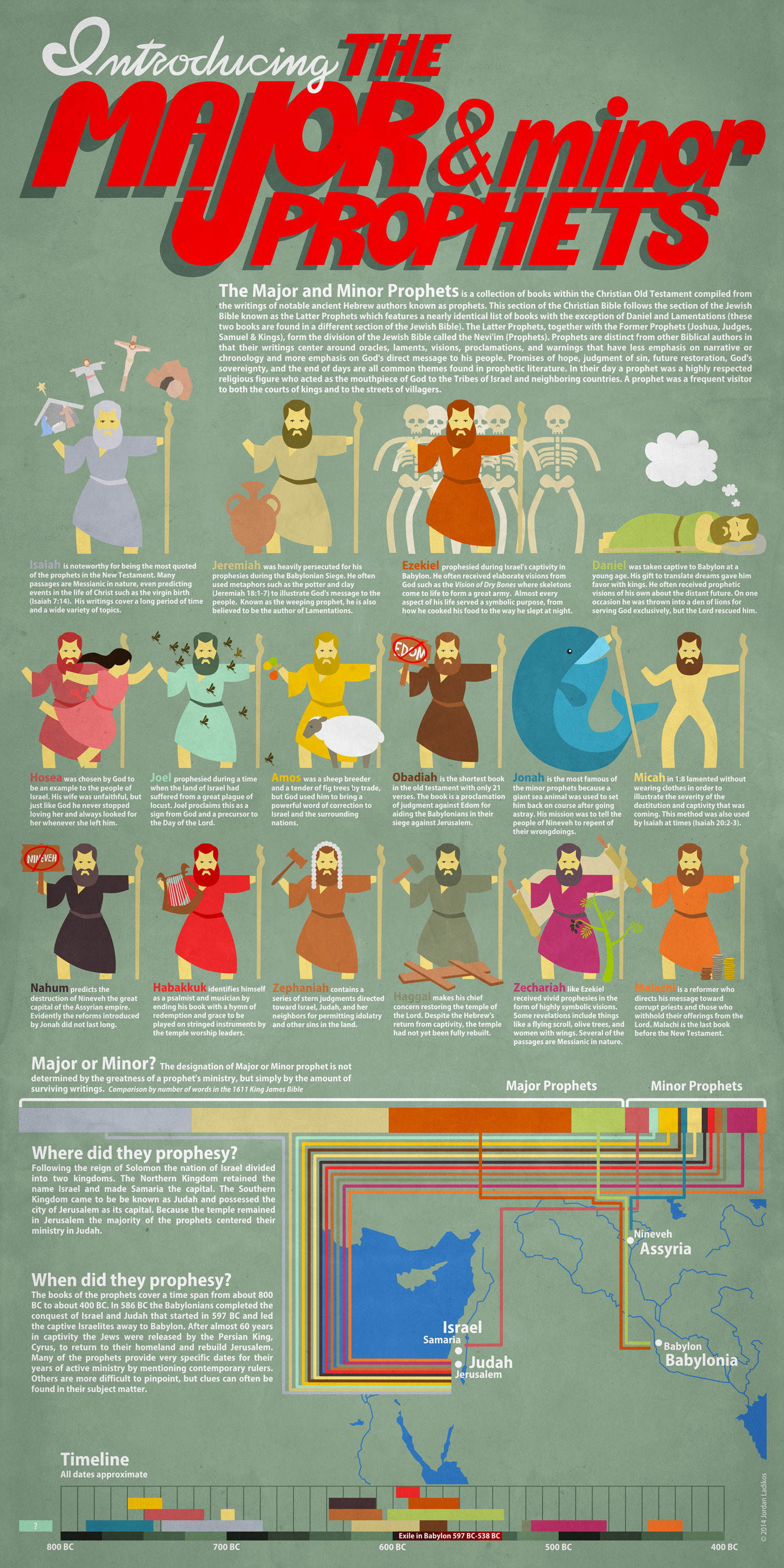
The Major and Minor Prophet division of the Holy Bible does not denote the importance or rank of the writing prophets, but the length of the Holy Books which bear their prophecies.
- Ex: Jonah 4 chapters - Isaiah 66 chapters
- There are 12 minor prophets and 4 major prophets (5 books including Lamentations)
- In the Tanakh (Hebrew Bible), all these books were listed under "prophets". In the Septuagint and Vulgate translations, this classification of major and minor was mentioned.
- The prophet in the OT was someone who passed God's message to the people. A prophet in the NT is also someone who passes God's message or news (God's love and salvation for all mankind).
- In the OT, there were many prophets (Moses, David, Elijah, Elisha, etc.), but when we
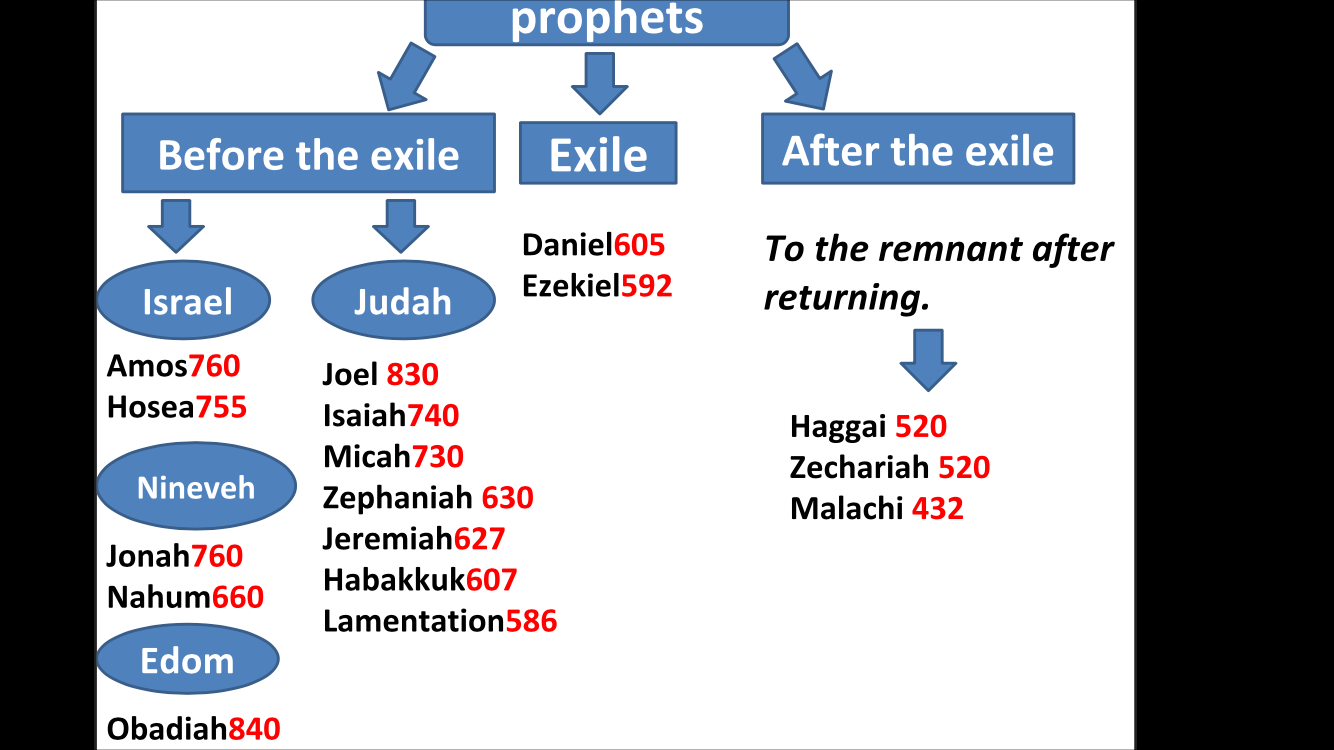
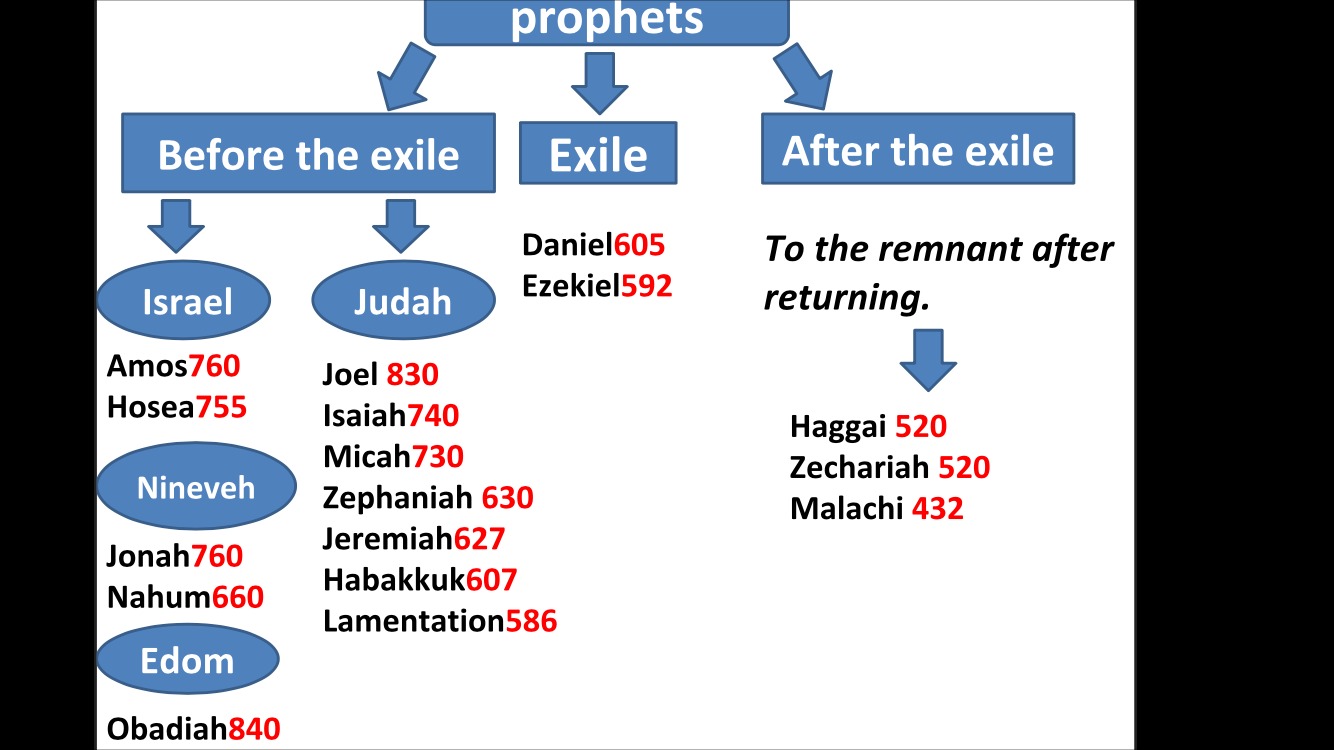
willreferdotoastheyou"Prophets",say.”we refer to the ones who recorded their prophecy. NehemiahAll5:12prophecies had one goal: Repentance!- Recorded prophecies were split into three groups: Before, during, and after the exile.
- Before: Repent so God doesn't bring the exile
- During: Repent so God can end the exile and take us back to our land
- After: Repent because the Messiah is coming
- The books of the prophets are rich with Messianic prophecies. All were fulfilled by Our Lord.
- All books have different themes. All books have the same message (repentance).
-
-
-
-
Comments:
NehemiahTheme
startedof Hosea: God's salvation
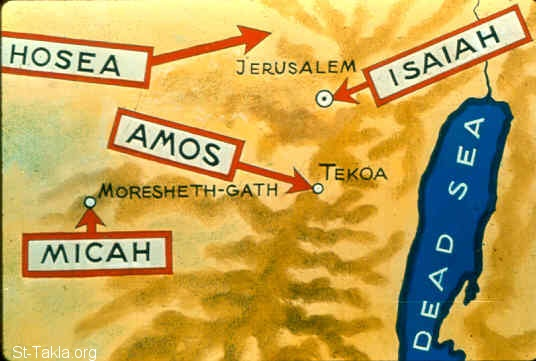
Messianic Prophecy: The Lord's entry todealEgyptwith(11:1)problems- Hosea
withis one of the minor prophets. -
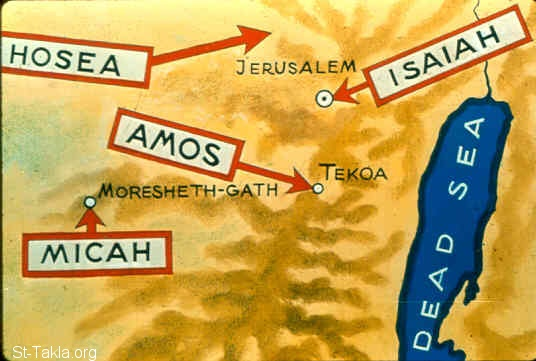
The book of Hosea was written for the Northern Kingdom of Israel
-
Outwardly, the nation was enjoying a time of prosperity and growth; but inwardly, moral corruption and spiritual adultery permeated the lives of the people.
Many - The prophet Hosea was instructed by God to marry an unfaithful woman, and he found in his own life a vivid illustration of
these problems were caused by usury. Usury is when a person lends money to another person and asks to returnthemoneyunfaithfulnesswithofextremely high-interest rates.Nehemiah met with theGod’s people andtheytheallfaithfulnessagreedof God.- Hosea repeatedly echoes his threefold message: God abhors the sins of His people; judgment is certain; but God’s love stands firm.
- Hosea, whose name means “Salvation.”
- The book of Hosea is a story of one-sided love and faithfulness that represents the relationship between Israel and God.
- As Gomer is married to
stopHosea,itso Israel is betrothed to God. Both relationships gradually disintegrate—Gomer runs after other men, andtoIsraelhelprunstheirafterbrethren.otherWe see Nehemiah's leadership in the society.gods. Nehemiah'Israel’sgenerosityspiritual idolatry isseenillustratedwhenbyhe is appointed governor and invites many people to sit with him at the same table. A lot of food was prepared daily.Sanballat, Tobiah, and Geshem the Arab tried to stop Nehemiah from completing the wall. Nehemiah dealt with them wisely without losing hope in God'Gomer’ssupport.physicalNehmiah'sadultery.faithTheand dedication led to the rebuildingdevelopment of thewallsbook can be traced inonlytwo52parts:days.
the adulterous wife and faithful husband (ch. 1–3), and the adulterous Israel and faithful Lord (ch. 4–14).Again,Hosea’stheremessage reflects the terrible fascination of Israel with Baal worship.- Baal means “husband” or “lord,” and his worship involved fertility rites that included ritual prostitution. Baal was the other lover to whom the unfaithful Israel often turned.
- Hosea provides one of the Old Testament’s most eloquent expressions of God’s mercy.
- Chapter 1:
- God asked Hosea to marry Gomer. She gave birth to three children. Each child's name was a message from God.
- First Child: Boy: Jezreel - God sows/scatters. What God sows from hardships/punishments are
namesthe seeds ofthoseourwhoactions. - Second Child: Girl: Lo-Ruhamah - No mercy. When man doesn't stop sinning and takes advantage of God's patience, he doesn't receive mercy, but judgment.
- Third Child: Boy: Lo-Ammi - Not my people. If many can't separate from sin, how can they belong to
JerusalemGod?mentionedTherefore, sin leads to separation from God and not being from his people.
returned - Chapter 11:
- Verse 1 Talks about how God saved his people a long time ago with Moses from Egypt. The number was small (child) and now they are a big nation (adult).
- Verse 1: Prophecy that God will flee to Egypt
- St. Matthew linked this verse to Christ's entry to Egypt (Matt. 2:15)
- Egypt was a symbol of idolatry and sin. This is a prophecy that God will accept the gentiles and Egypt will become sanctified (Isaiah 19.)
- Chapter 14:
- Fruits of the repentance
- V.1-3: Human's role in
chapterrepentance - V.4-9:
ChurchGod'sFathers look at thisrole inasanctificationway
seven.where
thoseActivity
peopleforwhoeverybelievedweek:inCanGod,youoffered to work and serve, and left their luxurious, lives were worthy to have their names written inrecite theBook12ofminorLife.prophets?
- Hosea
Ezrathescribewasstillaliveand he led the people to read the law and to another spiritual reformation.
Review/recap questions:
**Servant may add more questions
- What
position did Nehemiah occupy inare thelandmeanings ofJudah?these names: Hosea, Jezreel, Lo-Ruhamah, Lo-Ammi? - Why did
NehemiahGodnotaskdemandHoseathe governor’s provisions? How many days did itto taketoforrebuildhimselftheawall?wife Howofmany times did Sanballat send messages to Nehemiah?harlotry?- Why did
NehemiahGodrefusesay tomeetthewithHouseSanballatof Israel “You are not My people andhisIallies?will not by your God"? HowWhat didNehemiahGodfigure out that Shemaiah was a traitor?Who read from the Book of the Law?When was the last timepromise the peoplemadeofboothsIsrael?- Find
thatatime?prophecy is in this book and when it was fulfilled. Give verses.
Homework:
**Servant may add more questions
WhatHosea’spositionwifedidwasNehemiahcalledoccupy_________.- The number of the
landchildren ofJudah?Israel shall be as:
a)atheprieststars b)athegovernorsand of the sea c)athescribewavesd)ofathesingerocean Who was invited to Nehemiah’s table?a) Jews b) rulers c) people from other nations d) all of theseHow many times did Sanballat send messages to Nehemiah?a) 2 b) 3 c) 5 d) 10How many days did it take to rebuild the wall?a) 15 b) 35 c) 42 d) 52