
Week 2: Joel
Week 2: Joel 1-3
Objective:
- The Locust Plague
- Mourning for the Land
- The Day of the Lord
- God’s Spirit Poured Out
- God Blesses His People
Resources:
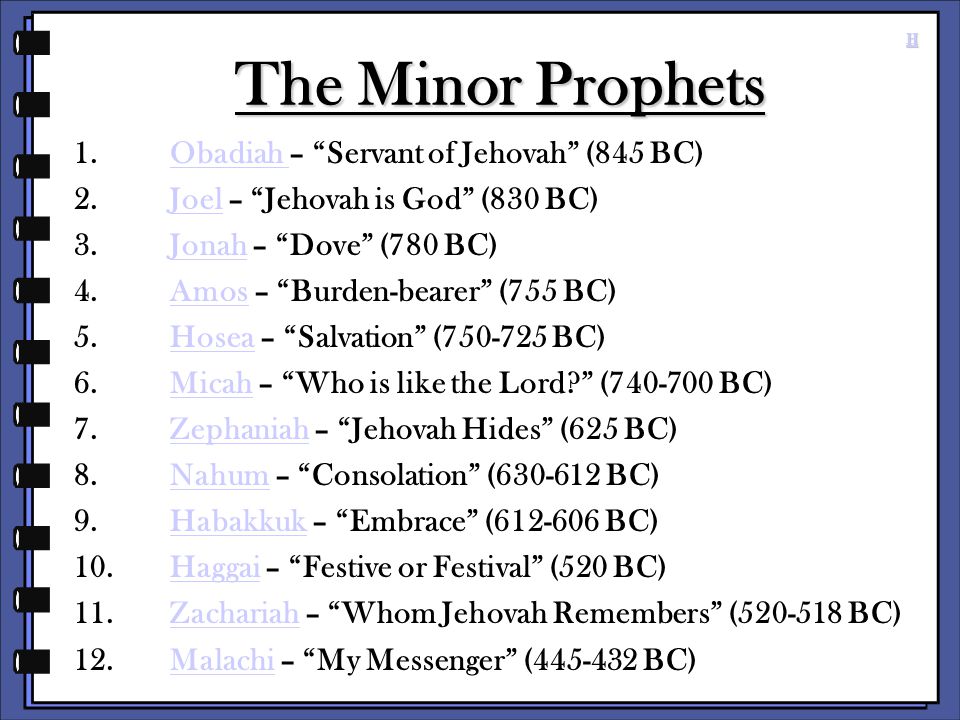
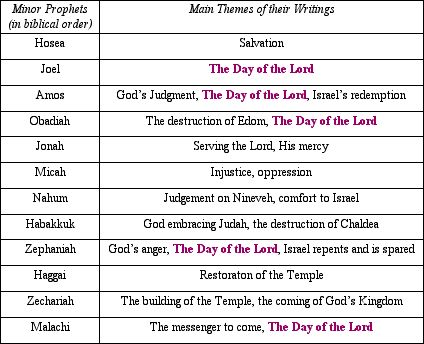
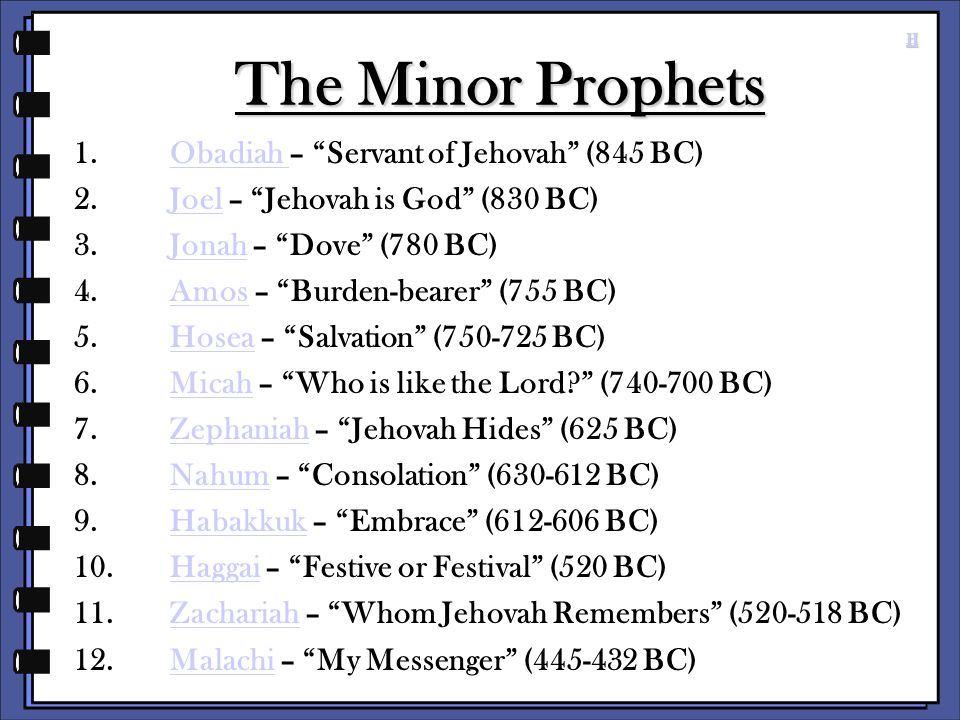
Activity for every week: Can you recite the 12 minor prophets?
Reading:
- Joel 1:1-20
- Joel 2:1-32
- Joel 3:18-21
Key verse(s):
“And it shall come to pass afterward, That I will pour out My Spirit on all flesh" Joel 2:28
NOTE TO SERVANT:
-
Please plan to ask and review these questions every week:
- Who are the minor prophets? Can you recite them?
- The theme for last week's minor prophet
- Highlight Messianic prophecy
- Who are the minor prophets? Can you recite them?
Minor Prophets introduction:
-
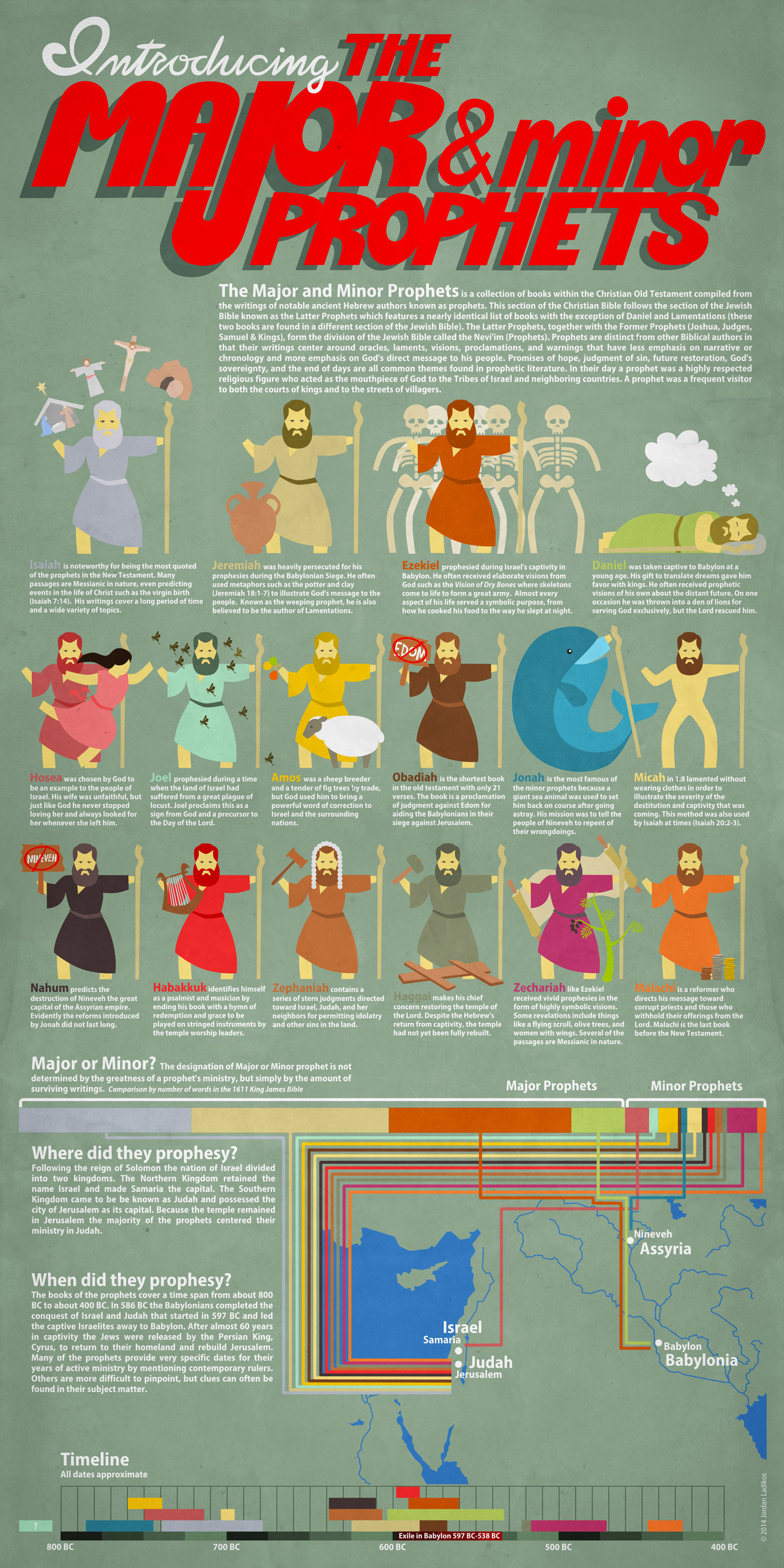
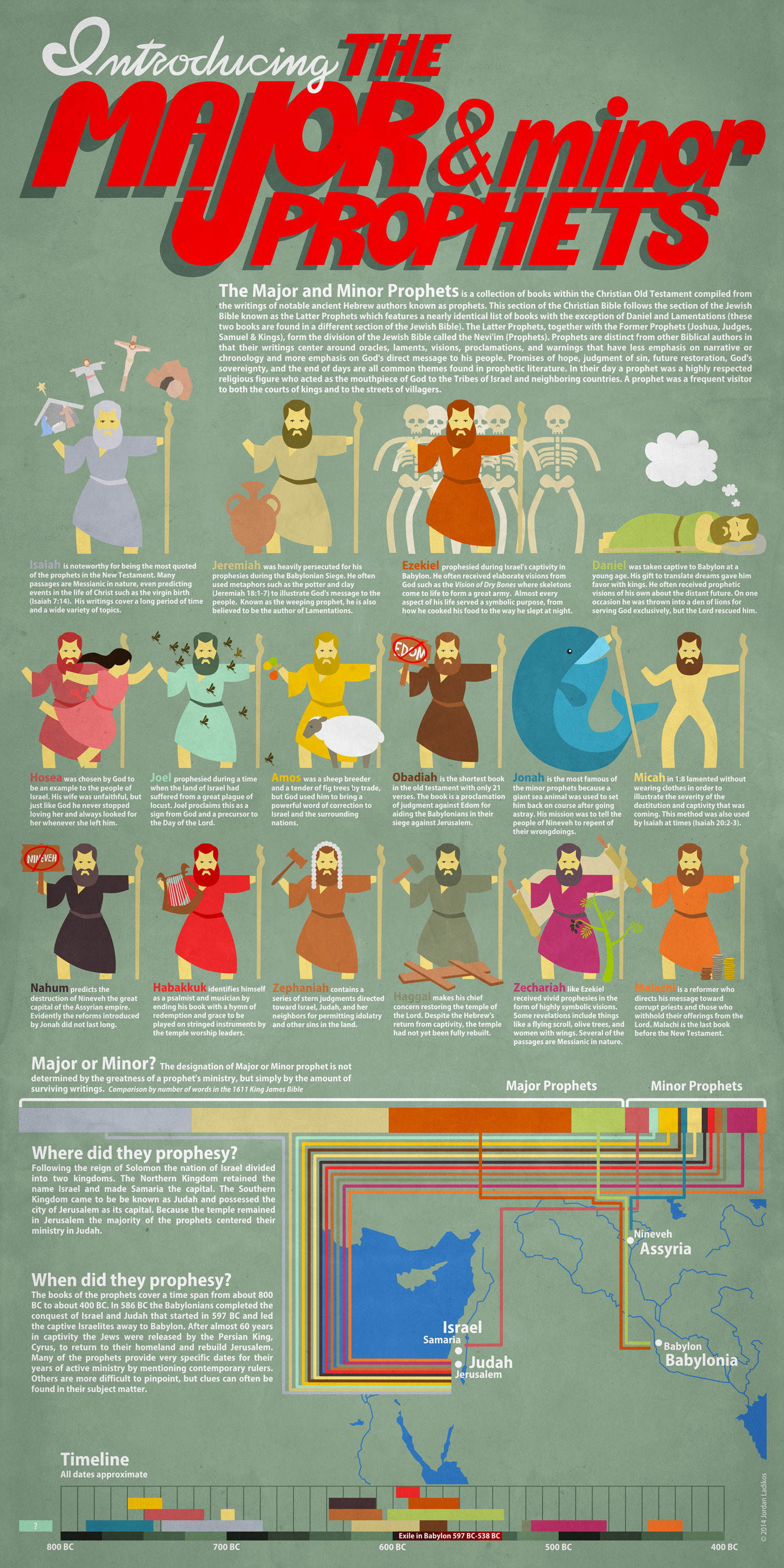
The Major and Minor Prophet division of the Holy Bible does not denote the importance or rank of the writing prophets, but the length of the Holy Books which bear their prophecies.
- Ex: Jonah 4 chapters - Isaiah 66 chapters
- There are 12 minor prophets and 4 major prophets (5 books including Lamentations)
- In the Tanakh (Hebrew Bible), all these books were listed under "prophets". In the Septuagint and Vulgate translations, this classification of major and minor was mentioned.
- The prophet in the OT was someone who passed God's message to the people. A prophet in the NT is also someone who passes God's message or news (God's love and salvation for all mankind).
- In the OT, there were many prophets (Moses, David, Elijah, Elisha, etc.), but when we refer to the "Prophets", we refer to the ones who recorded their prophecy.
- All prophecies had one goal: Repentance!
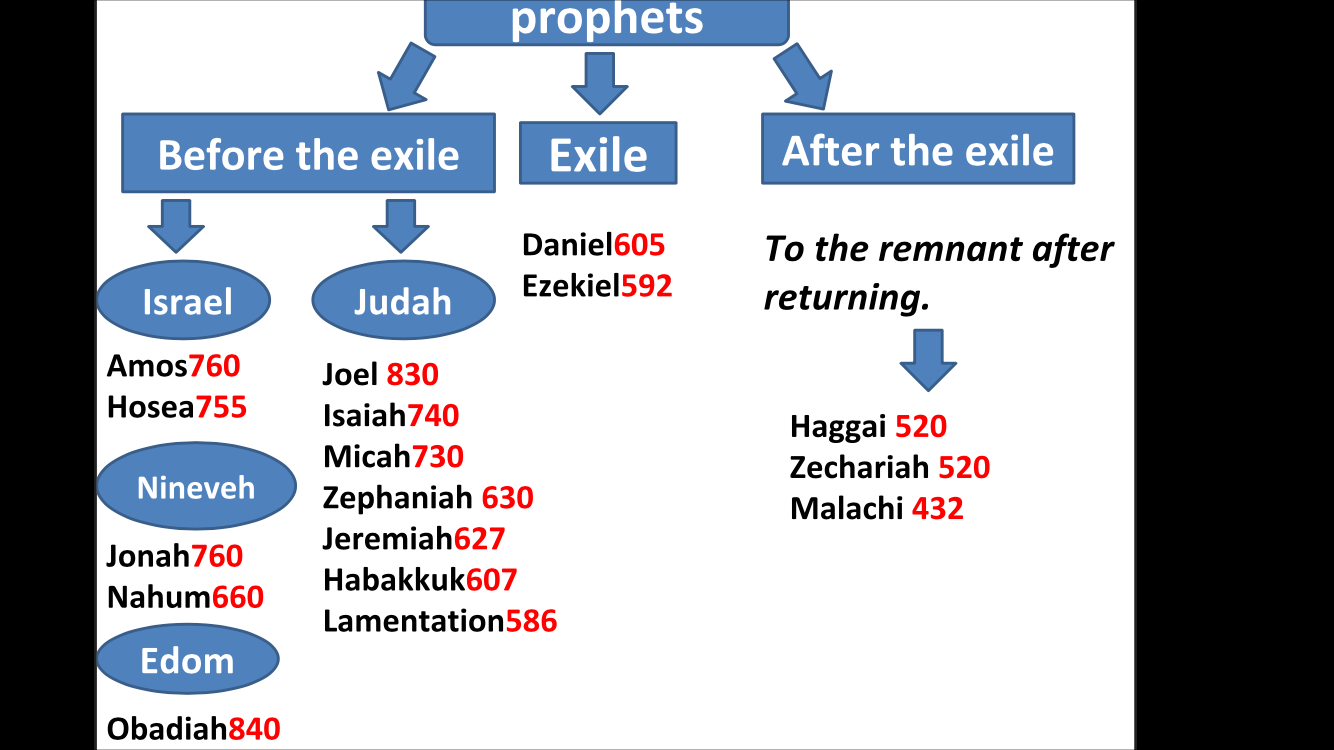
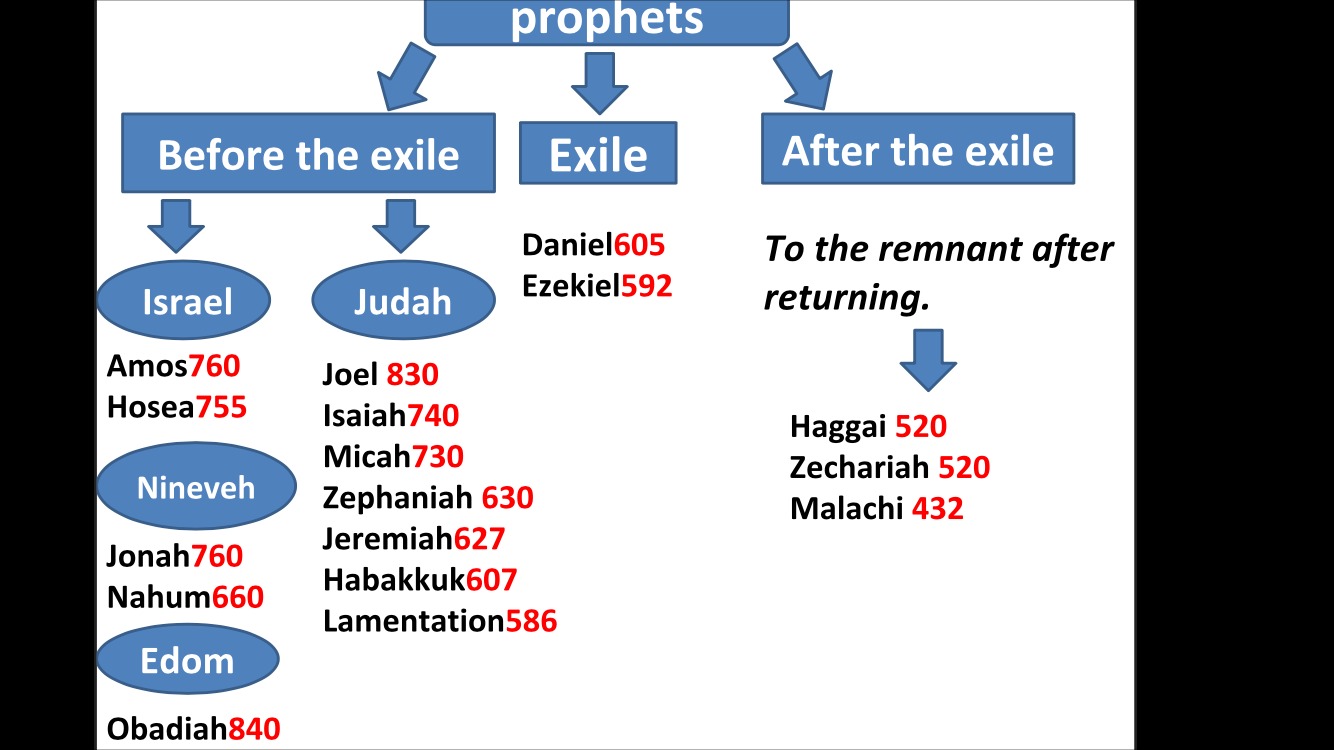
- Recorded prophecies were split into three groups: Before, during, and after the exile.
- Before: Repent so God doesn't bring the exile
- During: Repent so God can end the exile and take us back to our land
- After: Repent because the Messiah is coming
- The books of the prophets are rich with Messianic prophecies. All were fulfilled by Our Lord.
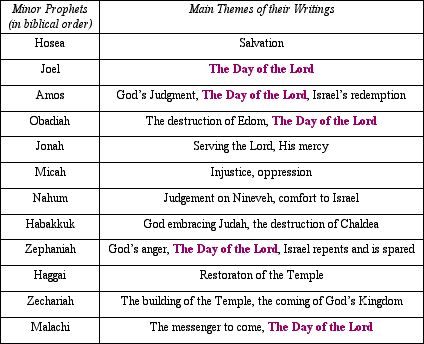
- All books have different themes. All books have the same message (repentance).
-
-
-
-
-
Comments:
Theme of Joel: The dayDay of the Lord
Messianic Prophecy: The Lord'sHoly entrySpirit toon EgyptPentecost (11:1)2:28)
HoseaJoel is one of the minor prophets.-
The book of
HoseaJoel was written for theNorthernSouthern Kingdom of Israel - Joel
Outwardly,meansthe nation was enjoying a time of prosperity and growth; but inwardly, moral corruption and spiritual adultery permeated the lives of the people. The prophet Hosea was instructed by God to marry an unfaithful woman, and he found in his own life a vivid illustration of the unfaithfulness of God’s people and the faithfulness of God.Hosea repeatedly echoes his threefold message: God abhors the sins of His people; judgment"Jehovah iscertain; but God’s love stands firm.Hosea, whose name means “Salvation.”God"- The book of
HoseaJoeliscanabestorydividedofintoone-sidedtwolovemajorand faithfulness that representssections: therelationship between Israel and God. As Gomer is married to Hosea, so Israel is betrothed to God. Both relationships gradually disintegrate—Gomer runs after other men, and Israel runs after other gods.Israel’s spiritual idolatry is illustrated by Gomer’s physical adultery. The developmentday of thebook can be tracedLord intwo parts: the adulterous wife and faithful husbandretrospect (ch.1–3),1); and theadulterous Israel and faithful Lord (ch. 4–14).Hosea’s message reflects the terrible fascination of Israel with Baal worship.Baal means “husband” or “lord,” and his worship involved fertility rites that included ritual prostitution. Baal was the other lover to whom the unfaithful Israel often turned.Hosea provides oneday of theOldLordTestament’sinmostprospecteloquent(chs.expressions of God’s mercy.2,3).- Chapter 1:
GodTheaskedwavesHoseaofto marry Gomer. She gave birth to three children. Each child's name was a message from God.First Child: Boy: Jezreel - God sows/scatters. What God sows from hardships/punishmentslocusts arethelikeseedslevels ofoursin:actions.- Chewing
Secondlocust:Child: Girl: Lo-Ruhamahsmall -No mercy. When man doesn't stop sinning and takes advantage of God's patience, he doesn't receive mercy, but judgment.Third Child: Boy: Lo-Ammi - Not my people. If manycan'tseparatemovefrommuch.sin,Smallhowthoughts into the heart and mind- Swarming locust: started to move.
- Crawling locust: developed small wings.
- Consuming locust: Strong wings that can fly. Sins when they
belongcompletely grow and take over the human
- St. Jermone symbolizes these four waves to
God?theTherefore,foursinkingdomsleadsthat disciplined Judah (Southern kingdom): Babylon, Persia, Greece, and Rome. - V.6: Symbolizes the nations that will be very strong and take them to
separationcaptivity - V.9-10: No worship is taking place due to the lack of everything = no joy or communion with God
and not being from his people.
- V.1-11:
- The day of the Lord will be fearful to those who didn’t listen to his voice/warnings (locusts). Those who fear God, wait for this day joyfully.
Verse 1 Talks about howV.12-17: Godsavedishiscallingpeopleforarepentance.- V.13:
timeGodagowantswithourMosesheartsfromtoEgypt.followThe number was small (child)Him andnowoffertheytruearerepentance.aNotbigjustnationan(adult).outside fake repentant look. Verse 1: Prophecy thatV.15-17: Godwillisfleecalling everyone toEgyptSt. Matthew linked this verse to Christ's entry to Egypt (Matt. 2:15)repentEgyptV.23:wasRain/water is a symbol ofidolatrythe Holy Spirit. Former rain comes at the beginning right after sowing to help the seeds grow andsin.bud.ThisLatterisrainacomes later to help the small buds become big trees and produce fruits. The Holy Spirit (Former rain) comes on the day of baptism to purify us and keeps coming again (latter rain) during our life to sanctify us until the end of our life.- V.28: A prophecy
that God will accepton thegentilesdayandofEgyptPentecost.willWhenbecomeHissanctifiedSpirit was poured on His disciples. St. Peter quoted Joel in his sermon (IsaiahActs19.)
FruitsV.18: There will be joy and happiness after we receive the Holy Spirit. The dry mountains are now dripping with wine (wine is a symbol of Joy in therepentanceBible).V.1-3:TheHuman'sBookroleends with a message of hope and joy inrepentanceV.4-9:seeing God'srolework insanctificationHis Church.- Egypt and Edom: symbols of sin. Sin and violence will end, and God will reign forever (V.20)
Review/recap questions:
**Servant may add more questions
WhatWhomaredo themeaningslocustsof these names: Hosea, Jezreel, Lo-Ruhamah, Lo-Ammi?Why did God ask Hosea to take for himself a wife of harlotry?Why did God say to the House of Israel “You are not My people and I will not by your God"?represent?- What
didisGodmeantpromiseby the day of the Lord? - Who quoted the prophet Joel in the NT?
- How can the people
ofescapeIsrael?this invasion? FindWhatadoprophecyversesis28-29 inthischapterbook2andprophesywhen it was fulfilled. Give verses.about?
Homework:
**Servant may add more questions
Hosea’sJoelwifeaskedwasthecalledpriests_________.to a) Consecrate a fast b) Call a sacred assembly c) cry out to the LORD d) all of thoseTheTonumberwhom should the beasts of thechildrenfieldofcryIsraelout?shall be as:
a)theeachstarsother b) thesand of the seaLord c) thewaveshuntersofd)the oceanJoelan