
Week 9: Zephaniah
Objective:
-
The
ProphetGreatQuestionsDayGod’sofJudgmentsthe Lord -
A Call to Repentance
-
Judgment on Nations
-
The
Lord’sWickednessReplyof Jerusalem -
TheAJustFaithfulShall Live by FaithRemnant -
WoeJoytointhe Wicked The Prophet’God’sPrayerFaithfulness
Resources:
- Fr Tadros Y Malaty Commentary
- Catena Bible Commentary
- Fr Dawoud Lamie Bible study (Arabic)
- Minor Prophets SUSCOPTS
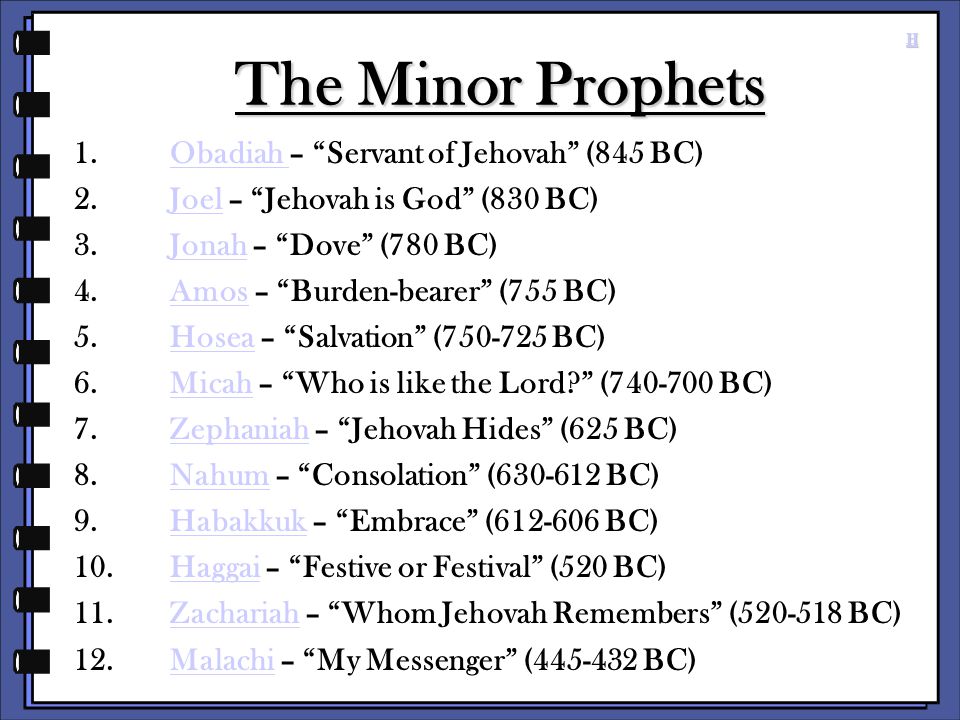
Activity for every week: Can you recite the 12 minor prophets?
Reading:
HabakkukZephaniah 1HabakkukZephaniah22:1-3HabakkukZephaniah33:8-20
Key verse(s):
"YetAt that time I will rejoicebring inyou back, Even at the Lord,time, I willgather joy in the God of my salvationyou" HabakkukZephaniah 3:1820
NOTE TO SERVANT:
-
Please plan to ask and review these questions every week:
- Who are the minor prophets? Can you recite them?
- The theme for last week's minor prophet
- Highlight Messianic prophecy
- Who are the minor prophets? Can you recite them?
Minor Prophets introduction:
-
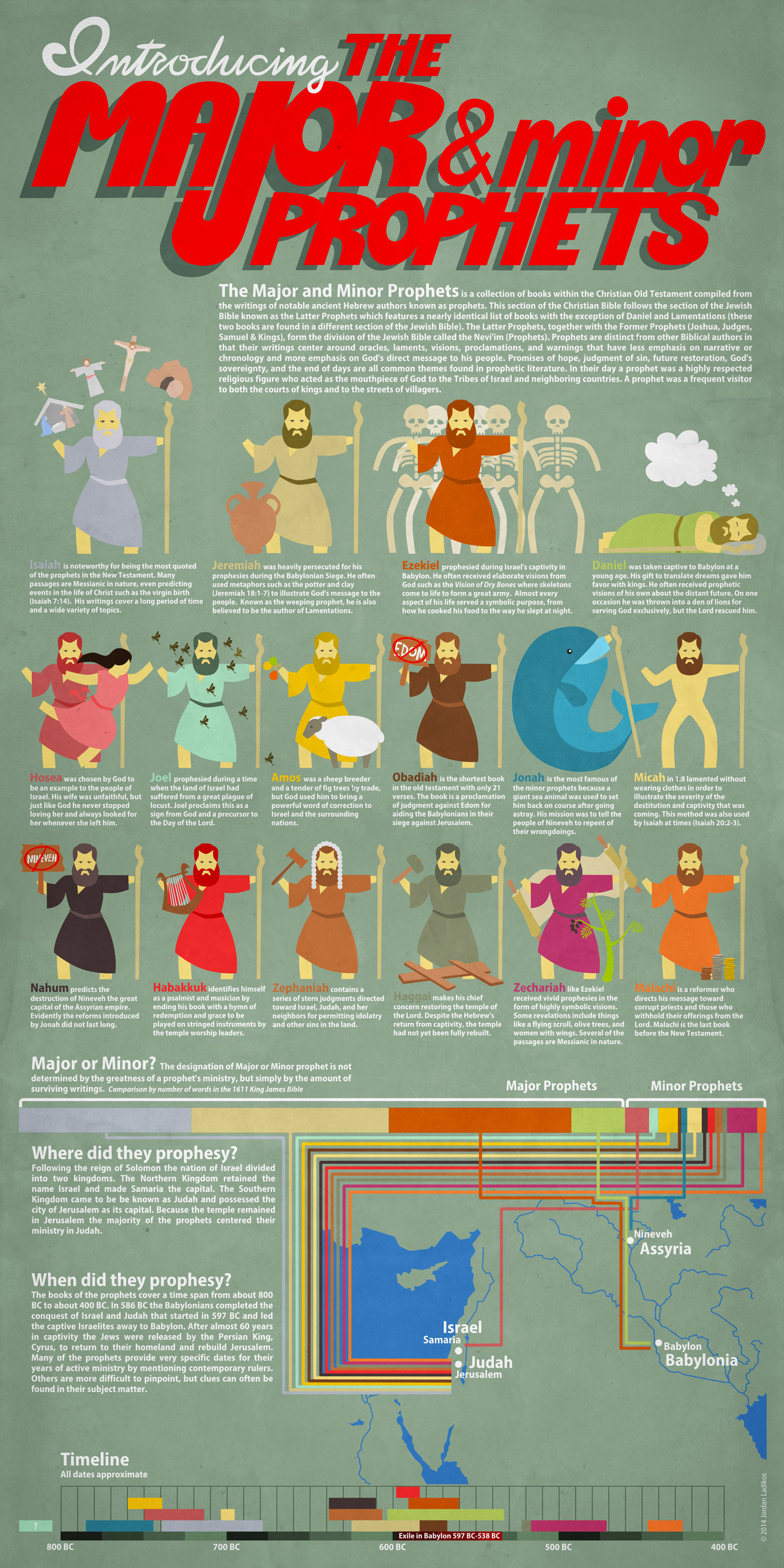
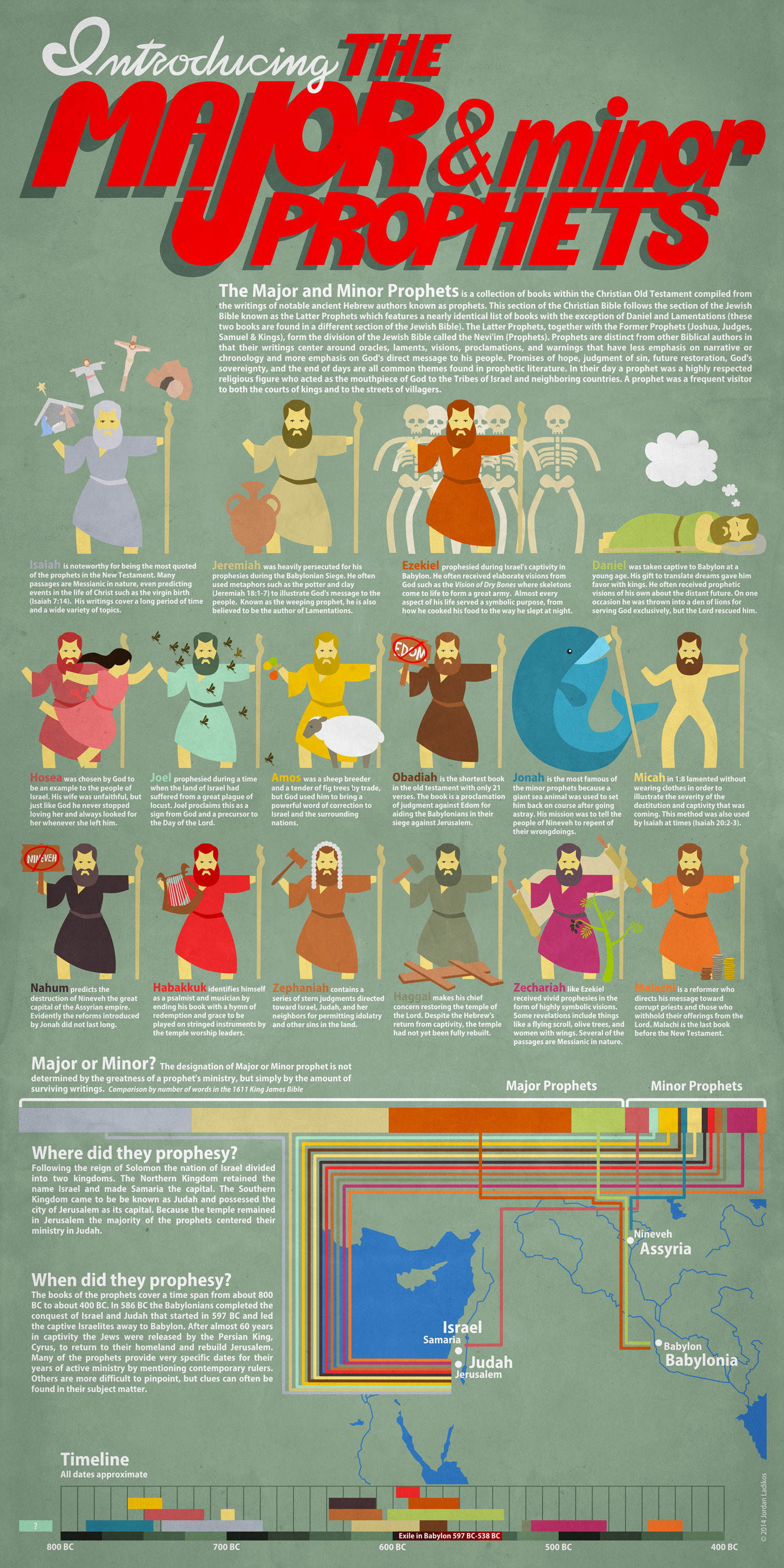
The Major and Minor Prophet division of the Holy Bible does not denote the importance or rank of the writing prophets, but the length of the Holy Books which bear their prophecies.
- Ex: Jonah 4 chapters - Isaiah 66 chapters
- There are 12 minor prophets and 4 major prophets (5 books including Lamentations)
- In the Tanakh (Hebrew Bible), all these books were listed under "prophets". In the Septuagint and Vulgate translations, this classification of major and minor was mentioned.
- The prophet in the OT was someone who passed God's message to the people. A prophet in the NT is also someone who passes God's message or news (God's love and salvation for all mankind).
- In the OT, there were many prophets (Moses, David, Elijah, Elisha, etc.), but when we refer to the "Prophets", we refer to the ones who recorded their prophecy.
- All prophecies had one goal: Repentance!
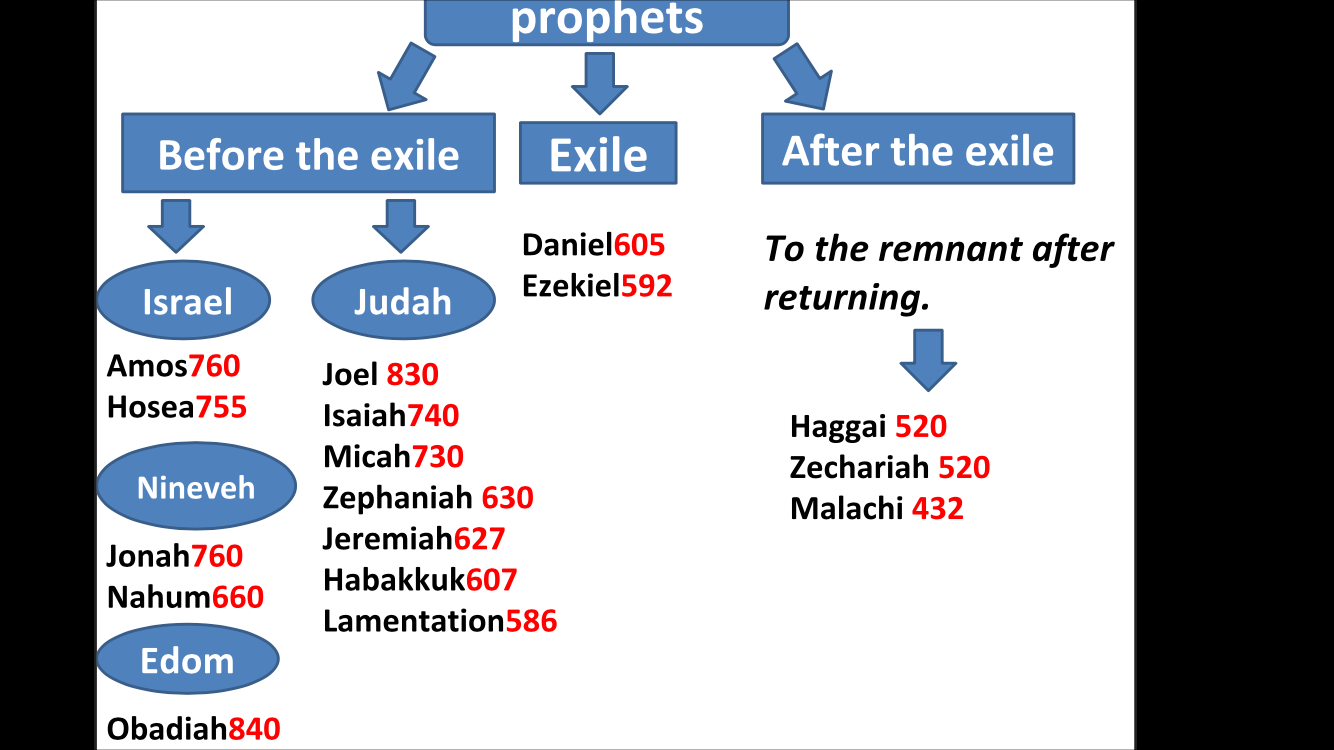
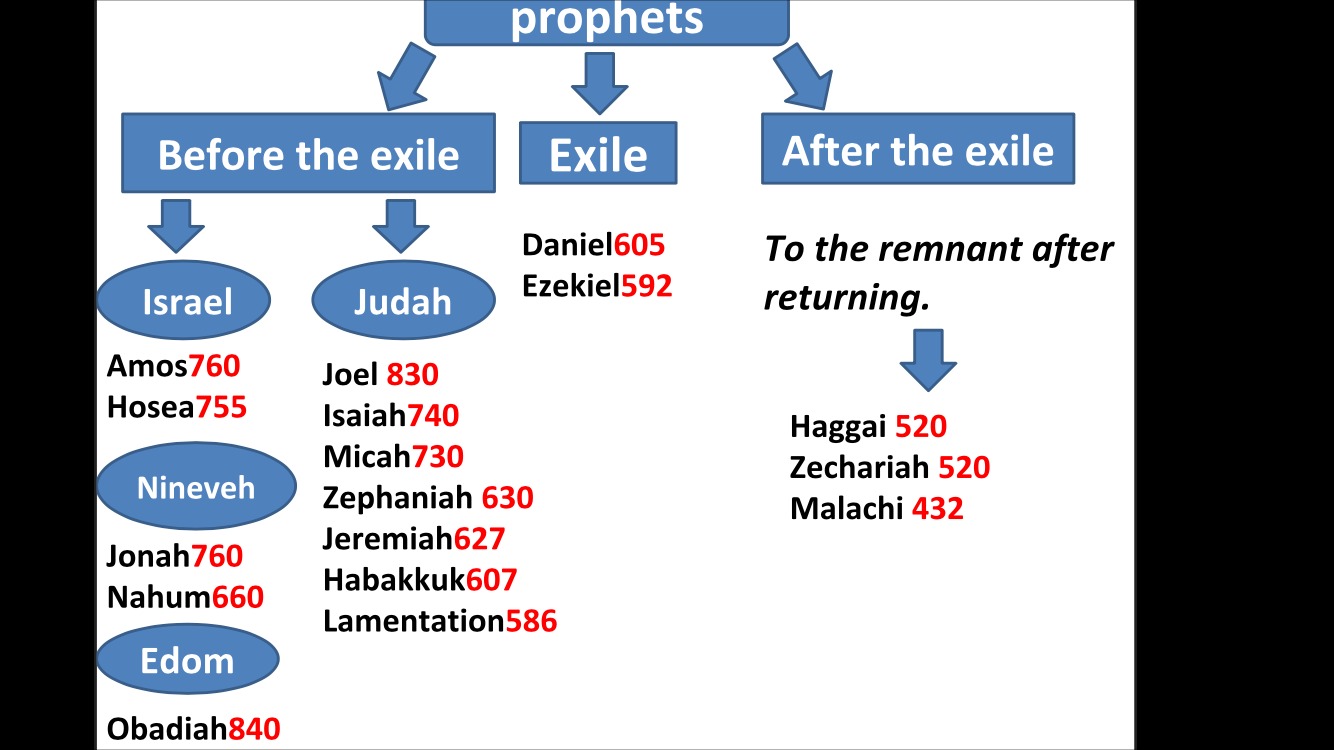
- Recorded prophecies were split into three groups: Before, during, and after the exile.
- Before: Repent so God doesn't bring the exile
- During: Repent so God can end the exile and take us back to our land
- After: Repent because the Messiah is coming
- The books of the prophets are rich with Messianic prophecies. Our Lord fulfilled all.
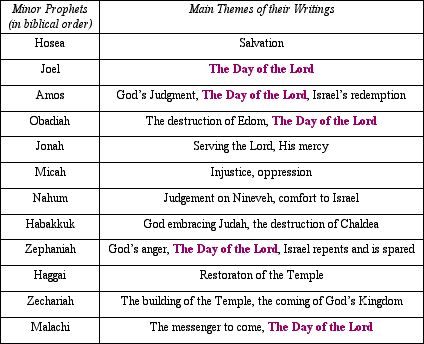
- The meaning of the names of the prophets is usually the message of their writings.
- The prophetic books always start with a strong tough message and then end with a joyful promising message.
- All books have different themes. All books have the same message (repentance).
-
-
-
-
-
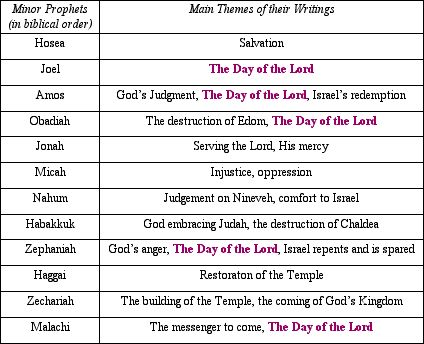
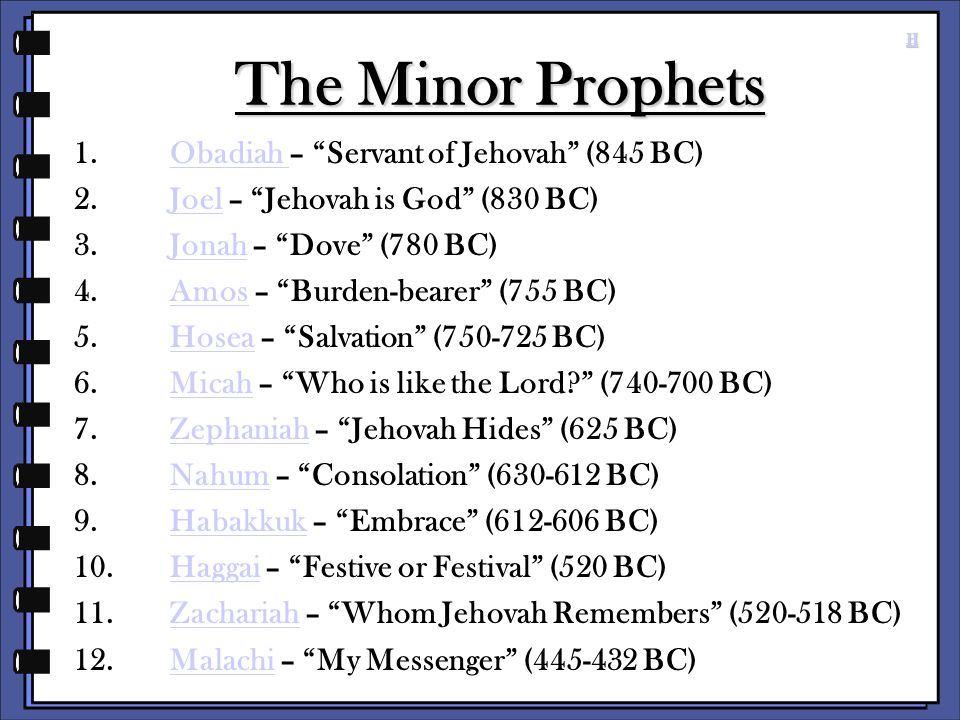
|
Minor Prophets |
||
|
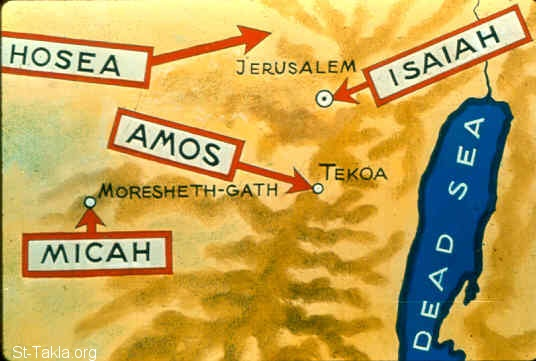
Before Assyrian Captivity Directed to the North Kingdom |
After Assyrian and before Babylonian captivities Directed to the South Kingdom |
After Captivity |
|
1. Hosea 2. Joel 3. Amos 4. Obadiah (Edom) 5. Jonah |
6. Micah 7. Nahum (Nineveh) 8. Habakkuk 9. Zephaniah |
10. Haggai 11. Zechariah 12. Malachi |
Comments:
Theme of Habakkuk: God edifies His people through Babylon - Destruction of Babylon
Messianic Prophecy: The Lord's incarnationsacrifice (3:13)1:7)
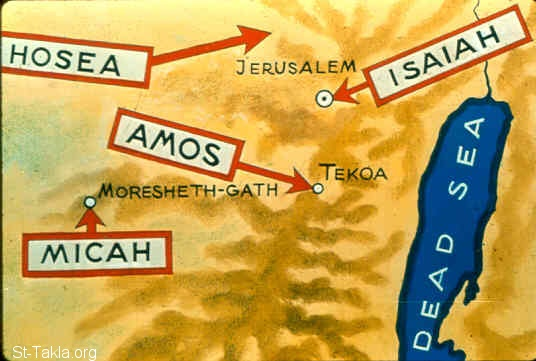
HabakkukZephaniah means "Embrace"God hides"HabakkukZephaniah was aLevitepriest(Hab.from3:19)the family of King HezekiahTheNormally the genealogy of a prophet is traced no further than his father. Zephaniah, however, traces his ancestry back four generations to demonstrate his royal lineage as the great-great-grandson of King Hezekiah (1:1).- Thus, he was a distant relative of King Josiah and those to whom he addresses his prophecy.
- Zephaniah lived at the time of Jeremiah and the destruction of the destruction of the Temple
- Therefore the book
takessendsplacea final warning to the people before theexile of the South Kingdom. Although the book of Habakkuk does not mention a king's reign, internal evidence indicates a date between King Josiah's death (609B.C.) and the beginning of theBabyloniancaptivity (605B.C.).A contemporary of Zephaniah and Jeremiah, Habakkuk warned of God’s approaching judgment through the approaching Babylonians.The prophecy was fulfilled in 605B.C. when Nebuchadnezzar deported ten thousand of Jerusalem’s prominent citizens to Babylon.The book can be divided into two parts:Chapter 1-2: Habakkuk cries to the Lord - Expressing his problemsExile
- Chapter
3:1:Habakkuk- V.1:
praisesShows the genealogy of Zephaniah and the time of his prophecy during the reign of King Josiah - V.7-9:
- "Be silent in the presence of the Lord
-God"Expressingbecausehisthethanksgivingpeople are waiting for God to see what He will do- V. 7: Refers to the NT. A man usually prepares the sacrifice. But this time, God Himself will prepare the sacrifice. This means that God Himself will offer Himself as a sacrifice on behalf of His people
TheGodmainmadeideaa Holy sacrifice. His people are not worthy, therefore he will "sanctify" His people. Invited them = sanctified them. They can not be invited without sanctification- Very similar to the Parable of the
book:Wedding- Feast (Matt. 22 & Lk. 14)
HabakkukThestresses"clothedGod’swithsovereignforeignfreedomapparel"asmeansGodnottoclothedaccomplishwithHisBaptism.goodNotendsclothedinwithHis way. In spite of appearances to the contrary, God is still on the throne as the Lord of historyChrist and theRulerGrace of thenations.NT.
They Thewillbookbecontainscastquestionsout.theTheyprophet directedwant toGod.takeQuestiona1:shortcutWhy does Godand notrespondgo through baptism (they want totheleapwrong and injustice in the landover) (1:2-4)?Answer 1: He is about to respond by using Babylon as a tool of judgment (1:5–11).Question 2: Why does God use the wicked Babylonians to punish those more righteous than themselves (1:12, 13)?Answer 2: God has chosen this action plan (2:2, 3). The just person will live by faith in God (2:4). Woe to the unrighteous (2:6–20).V.9)
Chapter 1:The book starts with Habbkuk asking God "Why?"God allows His people to ask Him why when the intention is to learn and feel comfortable. It's not good to ask God why to question Him and think that we can do better.Obviously God hears everyone’s cry and He always provides His comfort.Habakkuk asked why does God allow His people to suffer and be attacked by the Babylonians. Later, Habbkuk would learn that God allowed this for his people’s edification and salvation. He will reward the righteous and will avenge His people against the Babylonians.
- "Be silent in the presence of the Lord
- Chapter 2:
HabakkukTalksaskedaboutGodthewhatpeople's repentance- He called them an "undesirable nation" as they needed to
dorepent to be desired - "Seek the Lord, all you meek of the earth" This Invitation for everyone to go to God
- "Seek righteousness, seek humility" so that you may be saved in the day of the Lord's anger AKA be saved and accepted by
saying that Habakkuk should write the prophecy and make it very clear that the person running shall be able to read it. God's message to his people is very clear:The proud's soul is not uprightThe just shall live by his faith
Habakkuk 2:4 summarizes the spiritual life. They just shall be faithful and know that everything will come to an end and that God is in control (The Pantocartor).God.
answered - Chapter 3:
AfterPraiseHabakkuk asked all his questions andregarding theLord answered them, he wrote a beautiful praise expressing God's mercy and compassion towards mankind.3:13 is a Messianic prophecy. God will incarnate and will save His people through His Anointed One. He "struck the headjoy of thewicked"NTon(V.14-20)- "Daughter of Zion" is the
Cross.Church of the NT HabakkukGodunderstood that ifremoved thepeople repented, God would come, live with them,judgments andwilldefeatedsaveSatanthem.Chapter 3:17-19A beautiful hymn by HabakkukStarts with "though" shows Habakkuk's great faithEverything might not seem good. Things might not seem bright. "Though" things are not going well, Habakkuk will rejoice in theLord.
Review/recap questions:
**Servant may add more questionsHabakkukWhoquestionswasGod’skingrighteousness.atGivetheverses.time of Zephaniah?ByWhatwhatsacrificeshall the just live?Find a prophecy aboutwould the LordJesusprepareChristandinwhochapterare3.His guests?Habakkuk rejoiced inDescribe theLordDayunderofhardtheconditions.Lord.- What
verse.does the prophet urge the nation to do? - Why should the faithful of Jerusalem rejoice?
GiveHomework:
**Servant may add more questionsWhatGodkindwillofpunishnationthoseiswhothefillChaldeans?their master’s house with:
a)bittermoney b)terriblelies c)hastyfruits d)all of theseviolenceTheir(Zephaniahhorses1:14)alsoThearegreatswifter than ________, and more fierce than evening _______. Their chargers charge ahead; their cavalry comes from afar; they fly as the _________ that hastens to eat.For the earth will be filled with the _________day ofthe ________ of the LORD, as the waters cover the ______.Butthe LORD isinnear;Hisitholyis_______.nearLetandallhastens quickly. The noise of theearthDaykeepof________thebeforeLORD_______."is bitter; there the mighty men shall cry out. Who said this?Yet IWhat will_______intheLORD,peopleIdowillwith_______ainpurethe God of my __________.language?- (Zephaniah 3:17) "The LORD your God is
myin________;your midst, the Mighty One, will save; He willmakerejoicemyoverfeetyoulikewith_______'s feet, andgladness, He willmakequietmeyouwalkwithonHismylove,_______Hehills.will rejoice over you with singing." What does this mean?
- V.1:
- Therefore the book