
Lesson 1: Definite and Indefinite Articles
Nouns
A noun is a word that names a person, place, thing or idea. For example: Peter, bicycle, dog, Alexandria, and truth are all nouns. Coptic nouns are classified by number and gender.
Number: They can be singular (s.) or plural (pl.) like in English. Contrast this with Arabic where a noun can be singular, dual (du.) or plural. Many Coptic nouns do not have a distinct plural form, but some do. We will call these the irregular plural form. The number (singular or plural) is only evident from the preceding article.
Gender: Singular nouns can also be either masculine (m.) or feminine (f.) like in French, Spanish or Arabic. There is no neuter gender in Coptic (like in Greek or English).
Indefinite Articles
Indefinite articles are used to denote a noun that is not specified. For example, when we talk of "a book," we are referring to any book. Coptic has two forms of the indefinite article (singular and plural), which are attached directly to the beginning of the noun.
ⲟⲩ: Singular Indefinite Article for both masculine and feminine nouns. Translated to "a" or "an" in English
ϩⲁⲛ: Plural Indefinite Article which translates to the "s" at the end of a noun
| ⲟⲩ | a, an | ϩⲁⲛ | -s |
| ⲟⲩⲣⲁⲛ | a name | ϩⲁⲛⲣⲁⲛ | names |
| ⲟⲩⲣⲱⲙⲓ | a man | ϩⲁⲛⲣⲱⲙⲓ | men |
| ⲟⲩⲥ̀ϩⲓⲙⲓ | a woman | ϩⲁⲛϩⲓⲟⲙⲓ | women |
| ⲟⲩϧⲉⲗⲗⲟ | an elder | ϩⲁⲛϧⲉⲗⲗⲟ | elders |
| ⲟⲩⲃⲁⲗ | an eye | ϩⲁⲛⲃⲁⲗ | eyes |
| ⲟⲩⲛⲟⲩϯ | a god | ϩⲁⲛⲛⲟⲩϯ | gods |
| ⲟⲩⲥ̀ⲕⲏⲛⲏ | a dome | ϩⲁⲛⲥ̀ⲕⲏⲛⲏ | domes |
| ⲟⲩⲗⲩⲭⲛⲓⲁ | a tower | ϩⲁⲛⲗⲩⲭⲛⲓⲁ | towers |
Definite Articles
Where indefinite articles denote a noun that is not specified, definite articles denote a specified noun. For example, when we talk of "the book," we are referring to a specific book. English has only one definite article - "the" - which is used regardless of the noun it defines. Coptic has eight different forms, which are attached directly to the beginning of the noun.
The Coptic definite article depends on the number and gender of the noun, as well as its strength (more on that later) and sometimes the letter it begins with. It is important to use the correct definite article because this gives information about the noun.
Masculine Articles: ⲡⲓ-, ̀ⲡ-, ̀ⲫ-
Feminine Articles: ϯ-, ̀ⲧ-, ̀ⲑ-
Plural Articles: ⲛⲓ-, ⲛⲉⲛ-
Plural Nouns
In the vast majority of cases, ⲛⲓ- is used as the definite article for nouns. For example: "the hands" would be ⲛⲓϫⲓϫ.
The article ⲛⲉⲛ- is used in constructions involving the word "of" (i.e. "the" <pl. noun> "of" <noun>). For example: "the hands of Aaron" would be ⲛⲉⲛϫⲓϫ ̀ⲛⲀⲁⲣⲟⲛ.
Singular Nouns
The three masculine articles are equivalent to the three feminine articles.
ⲡⲓ- will follow the same rules as ϯ-
̀ⲡ- will follow the same rules as ̀ⲧ-
̀ⲫ- will follow the same rules as ̀ⲑ-
Strong/Weak Articles
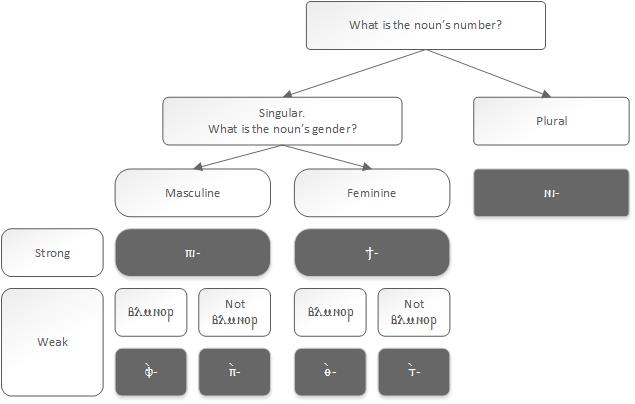
ⲡⲓ- and ϯ- are considered strong articles.
̀ⲡ-, ̀ⲧ-, ̀ⲫ-, ̀ⲑ- are considered weak articles.
The strong articles are used in more specific situations than their counterparts. For example, if you're referring to a specific father, you would say ⲡⲓⲓⲱⲧ. However, if you were to say ̀ⲫⲓⲱⲧ, you would be understood to be referring to the father who is already will known; or considered to be unique or one-of-a-kind. So ̀ⲫⲓⲱⲧ is understood as referring to God the Father. Likewise, ⲡⲓϣⲏⲣⲓ ("the son") would refer to a particular son whereas ̀ⲡϣⲏⲣⲓ refers to "the Son" (i.e. the Son of God). Sometimes this distinction occurs in English with the use of capital letters (e.g. The President).
Bilminor Articles
How do you distinguish between the two weak articles of each gender? When would you use ̀ⲡ or ̀ⲫ and ̀ⲧ or ̀ⲑ? This distinction is based on the first letter of the noun.
If the noun begins with any of the "Bilminor" letters (ⲃ ⲓ ⲗ ⲙ ⲛ ⲟ ⲣ) then ̀ⲫ and ̀ⲑ are used. If not, then ̀ⲡ and ̀ⲧ are used.
Summary
The following chart summarizes the rules for the Coptic Definite Article.
Application
Application 1: Singular Articles
This is an excerpt from the priest's prayer during the Offertory. All of the definite and indefinite articles are underlined below, and an explanation for each follows.
| ⲟⲩⲱⲟⲩ ⲛⲉⲙ ⲟⲩⲧⲁⲓⲟ: ⲟⲩⲧⲁⲓⲟ ⲛⲉⲙ ⲟⲩⲱⲟⲩ: ̀ⲛϯⲡⲁⲛⲁⲅⲓⲁ ̀ⲧⲣⲓⲁⲥ ̀ⲫⲓⲱⲧ ⲛⲉⲙ ̀ⲡϣⲏⲣⲓ ⲛⲉⲙ ⲡⲓ̀ⲡⲛⲉⲩⲙⲁ ̀ⲉⲑⲟⲩⲁⲃ. ⲟⲩϩⲓⲣⲏⲛⲏ ⲛⲉⲙ ⲟⲩⲕⲱⲧ ̀ⲉϫⲉⲛ ϯⲟⲓ ̀ⲙⲙⲁⲩⲁⲧⲥ ̀ⲉⲑⲟⲩⲁⲃ ̀ⲛⲕⲁⲑⲟⲗⲓⲕⲏ ̀ⲛⲁⲡⲟⲥⲧⲟⲗⲓⲕⲏ ̀ⲛⲉⲕ̀ⲕⲗⲏⲥⲓⲁ ̀ⲛⲧⲉ ̀ⲫⲛⲟⲩϯ: ̀ⲁⲙⲏⲛ. | Glory and honor, honor and glory, to the All-Holy Trinity, the Father and the Son and the Holy Spirit. Peace and edification to the one, holy, catholic, and apostolic church of God. Amen. |
- ⲟⲩⲱⲟⲩ - the article ⲟⲩ is the singular indefinite article. ⲟⲩⲱⲟⲩ means "glory"
- ⲟⲩⲧⲁⲓⲟ - the article ⲟⲩ is the singular indefinite article. ⲟⲩⲧⲁⲓⲟ means "honor"
- ϯⲡⲁⲛⲁⲅⲓⲁ - the article ϯ is one of the singular feminine definite articles. ϯⲡⲁⲛⲁⲅⲓⲁ translates to "the All-Holy." With the prefix ̀ⲛ-, the word means "of the All-Holy"
- ̀ⲧⲣⲓⲁⲥ - The word ̀ⲧⲣⲓⲁⲥ means Trinity and is not using definite article ̀ⲧ.
- ̀ⲫⲓⲱⲧ - The article ̀ⲫ- is one of the the singular masculine definite articles. Since ̀ⲫ- is a weak article, this word is referring to the Father who is already well known to the reader - God, the Father. A strong article would have translated to "the father." ̀ⲫ is used instead of ̀ⲡ because the noun starts with ⲓ, a Bilminor letter.
- ̀ⲡϣⲏⲣⲓ - The article ̀ⲡ -is one of the the singular masculine definite articles. Since ̀ⲡ- is a weak article, this word is referring to the Son who is already well known to the reader - God, the Son. A strong article would have translated to "the son." ̀ⲡ is used instead of ̀ⲫ because the noun starts with ϣ, which is not a Bilminor letter.
- ⲡⲓ̀ⲡⲛⲉⲩⲙⲁ - The article ⲡⲓ is a singular masculine definite article. So the word ⲡⲓ̀ⲡⲛⲉⲩⲙⲁ means "the spirit." The full text read ⲡⲓ̀ⲡⲛⲉⲩⲙⲁ ⲉⲑⲟⲩⲁⲃ - "the spirit that is holy" - The Holy Spirit.
- ⲟⲩϩⲓⲣⲏⲛⲏ - The article ⲟⲩ is the singular indefinite article. So ⲟⲩϩⲓⲣⲏⲛⲏ means "peace."
- ⲟⲩⲕⲱⲧ - The article ⲟⲩ is the singular indefinite article. ⲕⲱⲧ is a verb meaning "to edify." It is used here as a noun, so ⲟⲩⲕⲱⲧ means "edification."
- ϯⲟⲩ̀ⲓ - The article ϯ is the singular feminine definite article. So ϯⲟⲩ̀ⲓ means "the one."
- ̀ⲫⲛⲟⲩϯ - The article ̀ⲫ- is one of the the singular masculine definite articles. Since ̀ⲫ- is a weak article, this word is referring to the god who is already well known to the reader - God. A strong article would have translated to "the god." ̀ⲫ is used instead of ̀ⲡ because the noun starts with ⲛ, a Bilminor letter.
Application 2: Plural Indefinite Articles
This is an excerpt from Psalm 148 as it is chanted during the Fourth Canticle in the Vespers and Midnight Praises. All of the plural indefinite articles are underlined below, and an explanation for each follows.
| ϩⲁⲛϧⲉⲗϣⲓⲣⲓ ⲛⲉⲙ ϩⲁⲛⲡⲁⲣⲑⲉⲛⲟⲥ ⲁⲗⲗⲏⲗⲟⲩⲓⲁ: ϩⲁⲛϧⲉⲗⲗⲟⲓ ⲛⲉⲙ ϩⲁⲛⲁⲗⲱⲟⲩ̀ⲓ | Both young men and maidens alleluia: old men and children. |
- ϩⲁⲛϧⲉⲗϣⲓⲣⲓ - The article ϩⲁⲛ is the plural indefinite article. So ϩⲁⲛϧⲉⲗϣⲓⲣⲓ means "young men"
- ϩⲁⲛⲡⲁⲣⲑⲉⲛⲟⲥ - The article ϩⲁⲛ is the plural indefinite article. So ϩⲁⲛⲡⲁⲣⲑⲉⲛⲟⲥ means "virgins" or "maidens"
- ϩⲁⲛϧⲉⲗⲗⲟⲓ - The article ϩⲁⲛ is the plural indefinite article. So ϩⲁⲛϧⲉⲗⲗⲟⲓ means "old men" or "elders"
- ϩⲁⲛⲁⲗⲱⲟⲩ̀ⲓ - The article ϩⲁⲛ is the plural indefinite article. So ϩⲁⲛⲁⲗⲱⲟⲩ̀ⲓ means "children"
Application 3: Plural Definite Articles
These are excerpts from the Third Canticle as it is chanted during the Midnight Praise. All of the plural definite articles are underlined below, and an explanation for each follows.
| ̀ⲥⲙⲟⲩ ̀ⲉ̀ⲡϭⲟⲓⲥ ⲛⲓⲙⲟⲩⲙⲓ: ϩⲱⲥ ̀ⲉⲣⲟϥ... | Bless the Lord O you fountains, praise Him... |
| ̀ⲥⲙⲟⲩ ̀ⲉ̀ⲡϭⲟⲓⲥ ⲛⲓ̀ⲁⲙⲁⲓⲟⲩ ⲛⲉⲙ ⲛⲓⲓⲁⲣⲱⲟⲩ: ϩⲱⲥ ̀ⲉⲣⲟϥ... | Bless the Lord O you seas and rivers, praise Him... |
| ̀ⲥⲙⲟⲩ ̀ⲉ̀ⲡϭⲟⲓⲥ ⲛⲓⲕⲏⲧⲟⲥ ⲛⲉⲙ ⲉⲛⲭⲁⲓ ⲛⲓⲃⲉⲛ ⲉⲧⲕⲓⲙ ϧⲉⲛ ⲛⲓⲙⲱⲟⲩ: ϩⲱⲥ ̀ⲉⲣⲟϥ... | Bless the Lord O you whales and all that moves in the waters, praise Him... |
| ̀ⲥⲙⲟⲩ ̀ⲉ̀ⲡϭⲟⲓⲥ ⲛⲓϩⲁⲗⲁϯ ⲧⲏⲣⲟⲩ ̀ⲛⲧⲉ ̀ⲧⲫⲉ: ϩⲱⲥ ̀ⲉⲣⲟϥ... | Bless the Lord all you birds of the sky, praise Him... |
| ̀ⲥⲙⲟⲩ ̀ⲉ̀ⲡϭⲟⲓⲥ ⲛⲓⲑⲏⲣⲓⲟⲛ ⲛⲉⲙ ⲛⲓⲧⲉⲃⲛⲱⲟⲩ̀ⲓ ⲧⲏⲣⲟⲩ: ϩⲱⲥ ̀ⲉⲣⲟϥ... | Bless the Lord all you wild beasts and cattle, praise Him... |
- ⲛⲓⲙⲟⲩⲙⲓ - The article ⲛⲓ is the plural definite article. So ⲛⲓⲙⲟⲩⲙⲓ means "the fountains" or "the springs."
- ⲛⲓ̀ⲁⲙⲁⲓⲟⲩ - The article ⲛⲓ is the plural definite article. So ⲛⲓ̀ⲁⲙⲁⲓⲟⲩ means "the seas." ̀ⲁⲙⲁⲓⲟⲩ is an irregular plural for the singular ⲓⲟⲙ meaning "sea."
- ⲛⲓⲓⲁⲣⲱⲟⲩ - The article ⲛⲓ is the plural definite article. So ⲛⲓⲓⲁⲣⲱⲟⲩ means "the rivers." ⲓⲁⲣⲱⲟⲩ is an irregular plural for the singular ⲓⲁⲣⲟ meaning "river."
- ⲛⲓⲕⲏⲧⲟⲥ - The article ⲛⲓ is the plural definite article. So ⲛⲓⲕⲏⲧⲟⲥ means "the whales."
- ⲛⲓⲃⲉⲛ - The ⲛⲓ here is not an article but rather the word is ⲛⲓⲃⲉⲛ, an adjective meaning "every."
- ⲛⲓⲙⲱⲟⲩ - The article ⲛⲓ is the plural definite article. So ⲛⲓⲙⲱⲟⲩ means "the waters."
- ⲛⲓϩⲁⲗⲁϯ - The article ⲛⲓ is the plural definite article. So ⲛⲓϩⲁⲗⲁϯ means "the birds." ϩⲁⲗⲁϯ is an irregular plural for the singular ϩⲁⲗⲏⲧ meaning "bird."
- ⲛⲓⲑⲏⲣⲓⲟⲛ - The article ⲛⲓ is the plural definite article. So ⲛⲓⲑⲏⲣⲓⲟⲛ means "the wild animals."
- ⲛⲓⲧⲉⲃⲛⲱⲟⲩ̀ⲓ - The article ⲛⲓ is the plural definite article. So ⲛⲓⲧⲉⲃⲛⲱⲟⲩ̀ⲓ means "the beasts" or "the animals."
Exercises
Exercise 1: Translate to Coptic
Translate the following into Coptic:
- The man and the woman
- The brother and the sister
- The boy and the girl
- The sky and the earth
- The father and the mother
- The father and the son
- The Father and the Son
- The brothers and the sisters
- The fathers and the mothers
- The women and the men
- The boys and the girls
- The king and the queen
Exercise 2: Translate to English
Translate the following phrases into English:
- ⲛⲓⲣⲱⲙⲓ ⲛⲉⲙ ϯ̀ⲥϩⲓⲙⲓ
- ⲛⲓⲟⲩⲣⲱⲟⲩ ⲛⲉⲙ ⲛⲓⲟⲩⲏⲃ
- ̀ⲧⲫⲉ ⲛⲉⲙ ̀ⲡⲕⲁϩⲓ
- ⲡⲓ̀ⲉϩⲟⲟⲩ ⲛⲉⲙ ⲡⲓ̀ⲉϫⲱⲣϩ
- ϯ̀ⲥⲕⲏⲛⲏ ⲛⲉⲙ ϯⲗⲩⲭⲛⲓⲁ
- ϯϣⲟⲩⲣⲏ
- ⲡⲓⲥⲱⲙⲁ ⲛⲉⲙ ⲡⲓ̀ⲥⲛⲟϥ
- ⲡⲓⲱⲓⲕ ⲛⲉⲙ ⲡⲓ̀ⲁⲫⲟⲧ
- ⲛⲓⲃⲁⲗ ⲛⲉⲙ ⲛⲓⲙⲁϣϫ
- ⲡⲓⲥⲟⲛ ⲛⲉⲙ ϯⲥⲱⲛⲓ
- ⲛⲓϧⲉⲗⲗⲟⲓ ⲛⲉⲙ ⲛⲓⲁⲗⲱⲟⲩⲓ
- ̀ⲫⲛⲏⲃ ̀ⲡϭⲟⲓⲥ ̀ⲫⲛⲟⲩϯ ⲡⲓⲡⲁⲛⲧⲟⲕⲣⲁⲧⲱⲣ
Resources
- Moawad Daoud Lesson 1
- ACTS 2990 Lesson 2A
- Sameh Younan Chapter 2 (2.1.i, 2.1.ii)
- Nabil Mattar Chapter 2, Chapter 4