
Station 2: Where did the Bible come from?
Questions to Answer
- What is canonization? Who decided which books go into the OT? And the NT?
- What about translation? Do some things get lost in translation? Are some translations better than others?
- What about chapters and verses?
- How do we know that we have the right words that were actually spoken by Christ?
Presentation
St Pishoy classroom will be converted into "The Museum of Biblical History" with three exhibits. The presenting servant will be a museum tour guide who will conduct a tour of the museum's exhibits.
Exhibit 1 - Biblical Manuscripts
- We will have printouts of the following manuscripts (in reverse order of how old they are):
- Masoretic Text (Codex Leningradensis)
- Four Great Uncials (Codex Vaticanus, Codex Sinaiticus, Codex Alexandrinus, Codex Ephraemi Rescriptus)
- Bodmer Papyri
- Chester Beatty Papyri
- Magdalen Fragments
- Oxyrhynchus Papyri
- Rylands Papyrus
- Nash Papyrus
- Dead Sea Scrolls
- We will have the the following as posters:
-
- Introduce the station by talking about the posters
- Poster 1a: There are a lot of manuscripts of the Bible. A LOT. Let's take a look at the Old Testament first. In the Old Testament, we have 42,300 Manuscripts that we have found so far, of the Old Testament. And for the New Testament we have 23,986. The reason that the Old Testament has more, despite being older, is obvious - first because it is older, so has been around for longer, there are more copies, etc. And second because it is preserved by Jews and Christians!
- Poster 1b: This chart shows all the languages that these New Testament manuscripts are found in and obviously those are all translations of the original. Because the original was in Greek. So if we take just that Greek number - the number of manuscripts of the New Testament in its original language, it's 5,856. How does that compare with manuscripts of other historical documents?
- Poster 2: The fact is that we have more manuscripts for the New Testament than any other ancient document. The other fact is that our closest manuscripts are from only 30 years after the original.
- If you compare with Homer's Iliad, for example - it has a lot of manuscripts, but the earliest one is 400 years after the original. Or something like Tacitus' Annals we have very few manuscripts and the earliest one is 750 years after the original.
- Poster 3: But we also have tens of thousands of Patristic references to the New Testament which are all within the first Century after Christ from all around the world - and none of them disagree with the text of the New Testament. Justin Martyr lived in Rome, Irenaeus in Asia Minor, Clement and Origen in Alexandria, Tertullian in northern Africa, Hippolytus in Rome, Eusebius in Caesarea
- So what do these Manuscripts look like? Today you will have a chance to see and feel them. We'll look at them from the newest to the oldest.
- The Masoretic Text
- These are a couple of pages from the Codex Leningradensis which is the oldest complete manuscript of the Masoretic Text and lives in St Petersburg in Russia. The Masoretic Text was composed in the 9th Century and is the Hebrew Bible that is used for most Protestant Translations of the Old Testament.
- The Masoretic Text is in Hebrew, and very notably it was the first time that vowels, pronunciation and stress accents were added to the Hebrew Bible in the form of Diacritic Markings (tashkeel).
- It is called Masoretic because it was composed by the Masoretes - a school of scribes and Torah scholars who lived between the 7th and 11th Centuries in Jerusalem.
- Orthodox Christians do not use the Masoretic Text, but we use the Septuagint because:
- That is the translation of the Old Testament that was used and quoted by Christ and the Apostles
- It is over 1,000 years older than the Masoretic Text
- The Masoretic Text was made by Jews AFTER Christ and added interpretations to Hebrew words that may have not been there before
- The Great Uncials
- Here we have some pages from the Four Great Uncials - Codex Vaticanus, Codex Sinaiticus, Codex Alexandrinus, Codex Ephraemi Rescriptus
- These Codices are all of the Septuagint.
- Fill in more info about the Great Uncials - dating, naming, anything special about them
- Bodmer Papyri
- Fill in information for each of the below manuscripts - date, naming, language, anything special about it
- Chester Beatty Papyri
- Magdalen Fragments
- Oxyrhynchus Papyri
- Rylands Papyrus
- Nash Papyrus
- Dead Sea Scrolls
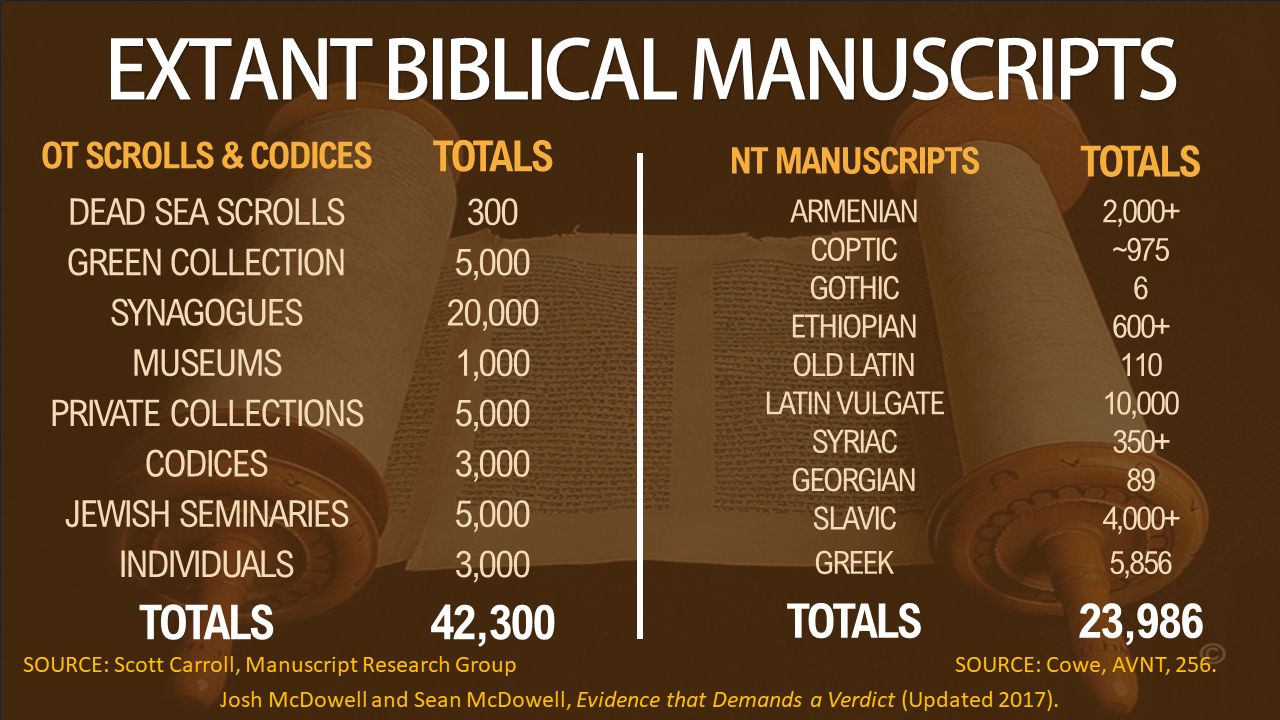
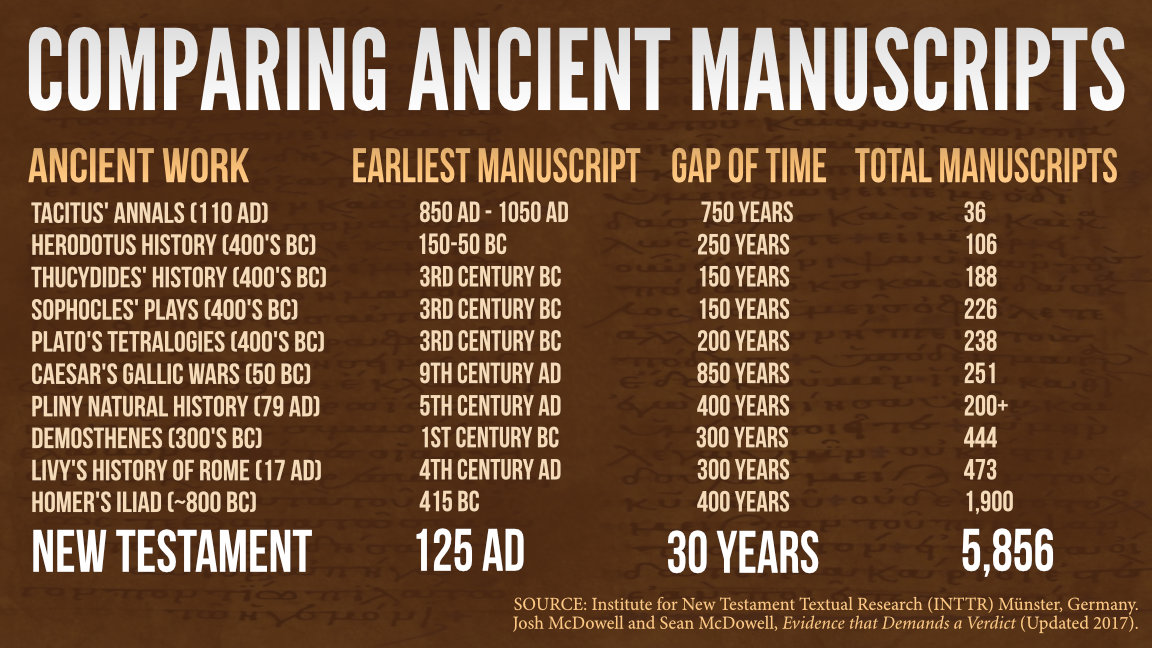
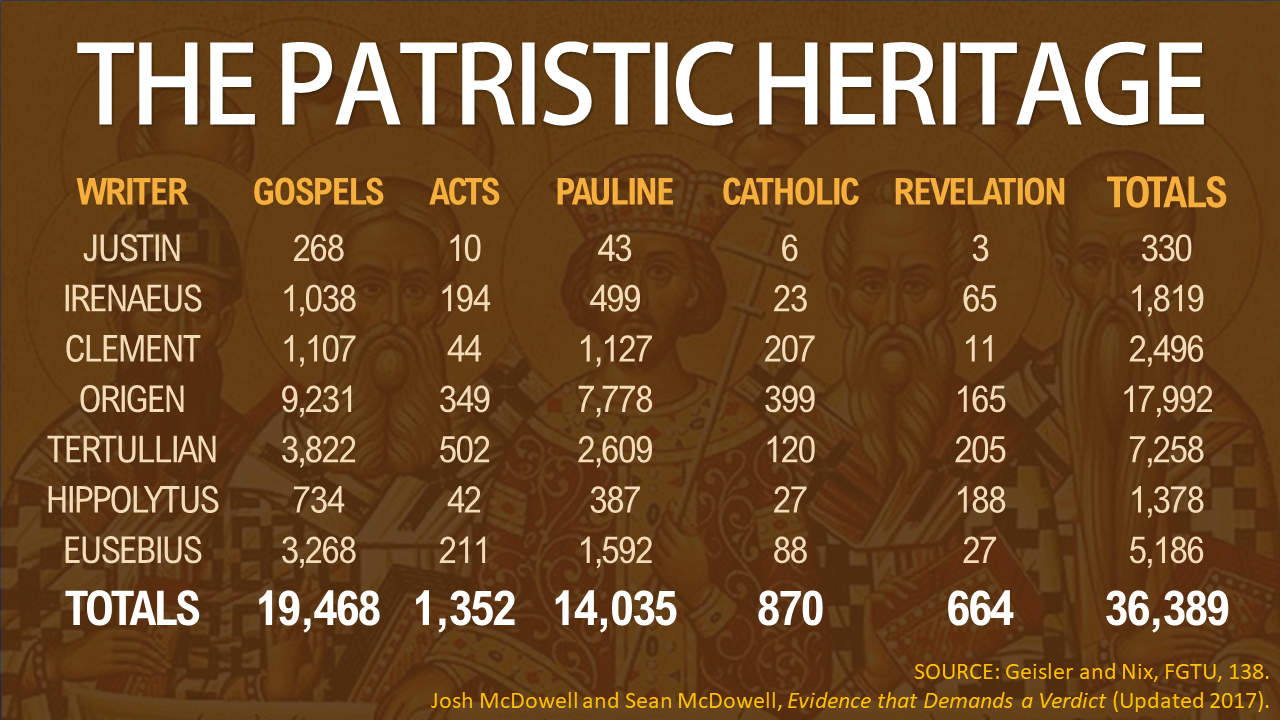
Exhibit 2 - Translations and Versions
- We will have a table that contains several Bible Translations including:
- KJV
- NKJV
- RSV
- NRSV
- NIV
- NLT
- GNT
- What is the Process of Translation
- First step is transmission - the original is transmitted to us in the form of manuscripts and scrolls as you saw in our last exhibit.
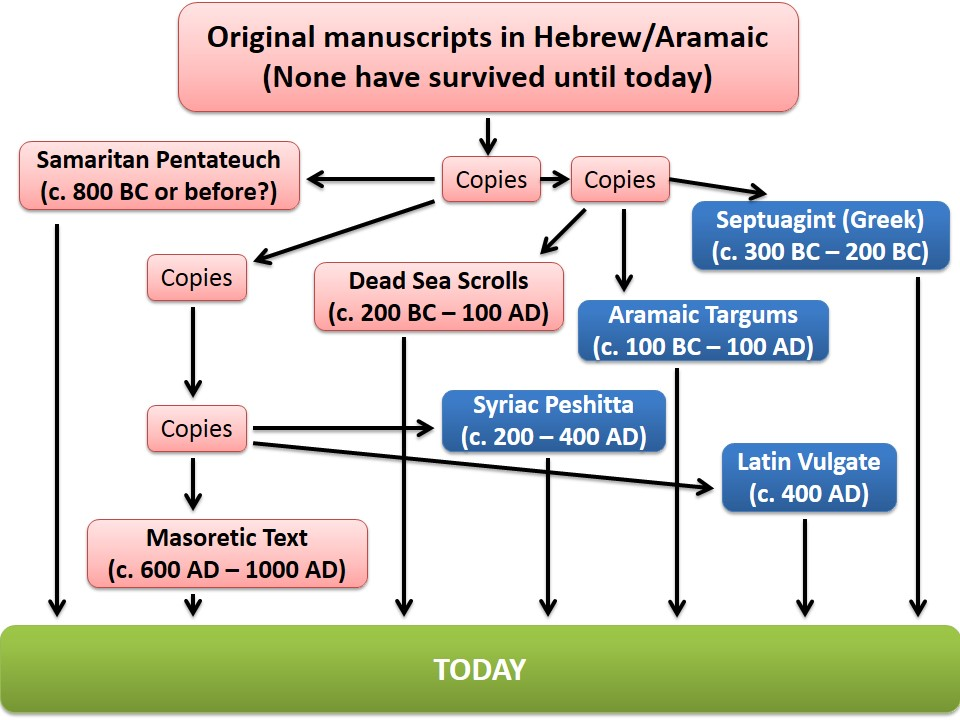
- Those manuscripts are analyzed - people do PhD Dissertations on one single manuscript. Everything about it is analyzed in an attempt to verify it, date it, compare it, etc.
- Out of those Manuscripts, a number of texts is established.
- The Critical Text is a combination of all the Manuscripts that represents "What we think the original author actually wrote"
- The Majority Text is a combination of all the Manuscripts that represents "What a majority of the manuscripts have"
- The difference between them is basically weight and count. Majority Text is based on count. Critical Text is based on weight. "We see that more manuscripts have this part, but it is more likely that the author meant this other one"
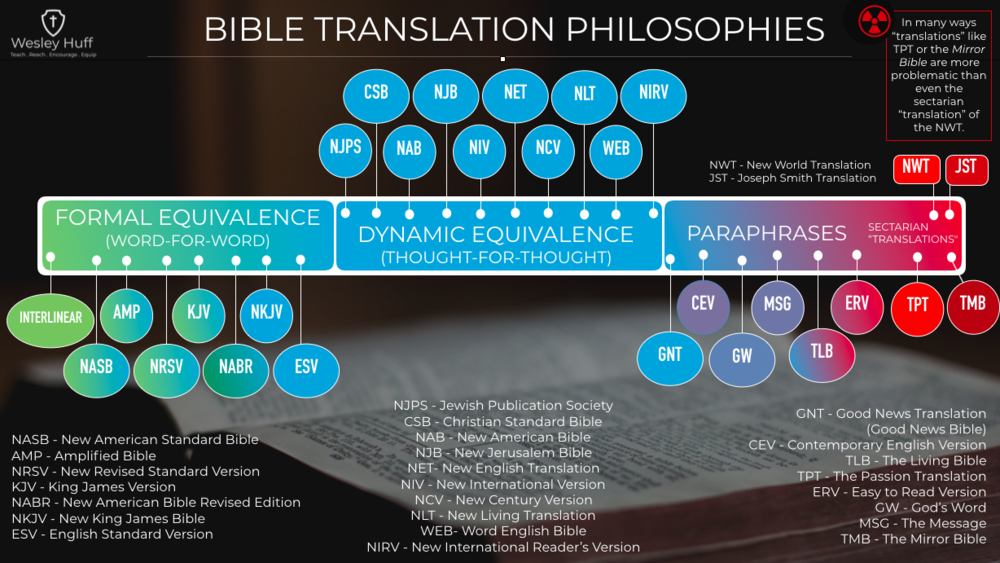
- Now that text must be translated. And when you go to translate something, there are three ways to translate it:
- Formal Equivalence: A literal translation that is word for word
- Dynamic Equivalence: A translation that is "thought for thought" or "phrase for phrase"
- Paraphrases
-
- First step is transmission - the original is transmitted to us in the form of manuscripts and scrolls as you saw in our last exhibit.
- Let's see some examples
- Find some interesting examples
- Omitted Verses in modern translations: https://en.wikipedia.org/wiki/List_of_New_Testament_verses_not_included_in_modern_English_translations
- Isaiah 7:14 in NKJV, KJV, NIV, RSV ("young woman")
- John 3:16 (especially in GNT, NLT)
- Psalm 23:1 (GNT)
- John 6:27 (NIV, NLT)
- Some other examples (i.e. better ones)
- New King James Version
- The New King James Version is preferred by the Orthodox Church
- Fill in the history of the KJV and NKJV
- Make sure to include the fact that KJV actually included the books that Protestants removed, though as an addendum and referring to them as Apocrypha
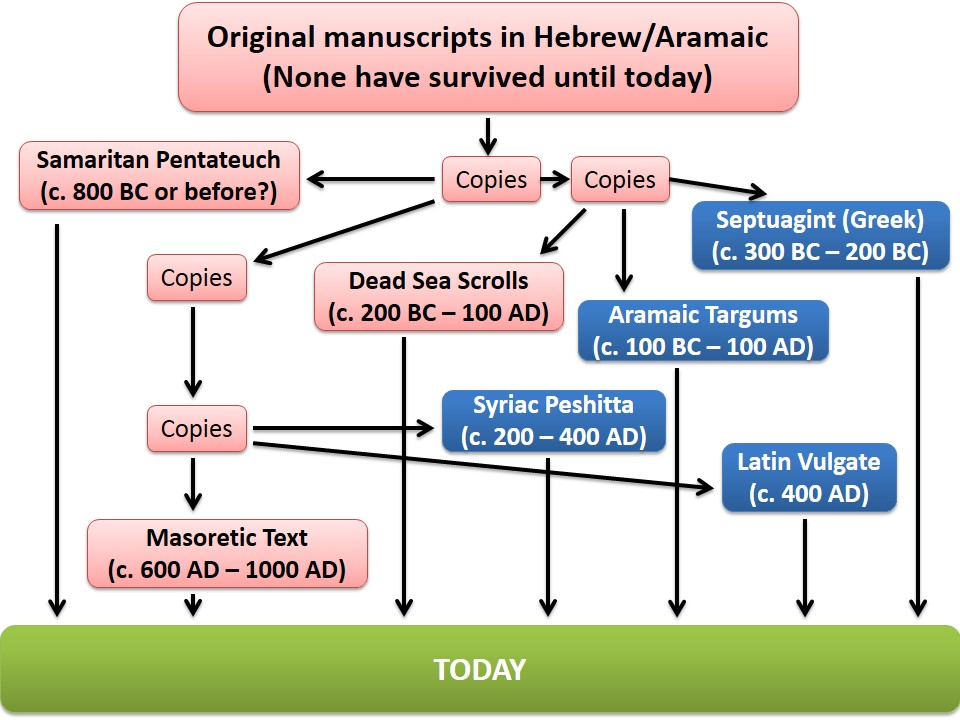
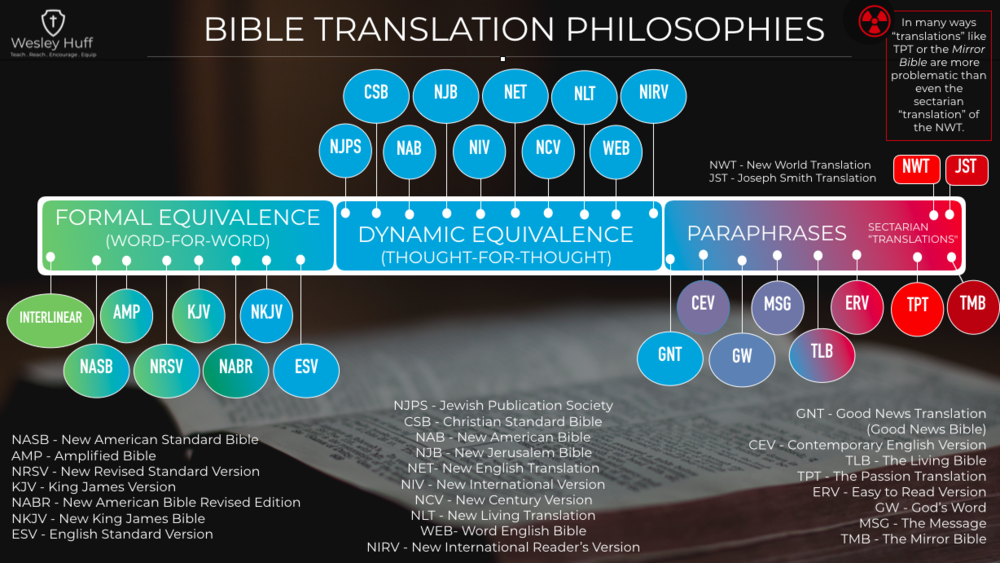
Exhibit 3 - Canonization
Resources
Canonization
- https://www.lacopts.org/orthodoxy/our-faith/the-holy-bible/the-canonization-of-scripture/
- https://www.suscopts.org/resources/literature/281/canonization-of-the-christian-scriptures/
- https://www.newadvent.org/cathen/03274a.htm
- https://www.suscopts.org/q&a/index.php?qid=812
- https://www.suscopts.org/conference/2002general_information.pdf (Pages 3-5)
Book of Enoch
Bible Chapters and Verses
- https://bible.org/question/how-and-when-was-bible-divided-chapters-and-verses
- https://www.christianity.com/wiki/bible/why-was-the-bible-divided-into-chapters-and-verses.html
- https://youtu.be/ABqm4uicsO0
Bible Translations
- https://www.suscopts.org/q&a/index.php?qid=814
- https://www.suscopts.org/q&a/index.php?qid=688
- https://www.suscopts.org/q&a/index.php?qid=525
- https://www.suscopts.org/q&a/index.php?qid=1337
- https://youtu.be/vcLYPqEXfqU